

Related Projects
How to Match Blender Jar Thread Types: A Complete Guide for Importers and Spare Parts Buyers
Finding the right blender jar replacement is not always as simple as matching the brand name. For importers, distributors, repair parts suppliers, and appliance brands, one of the most common compatibility challenges is identifying the correct blender jar thread type.
Even jars that look almost identical may use different thread designs, which can make them incompatible with the blade assembly or jar base. This guide explains how to identify blender jar thread types and avoid costly mistakes when sourcing compatible blender replacement parts.
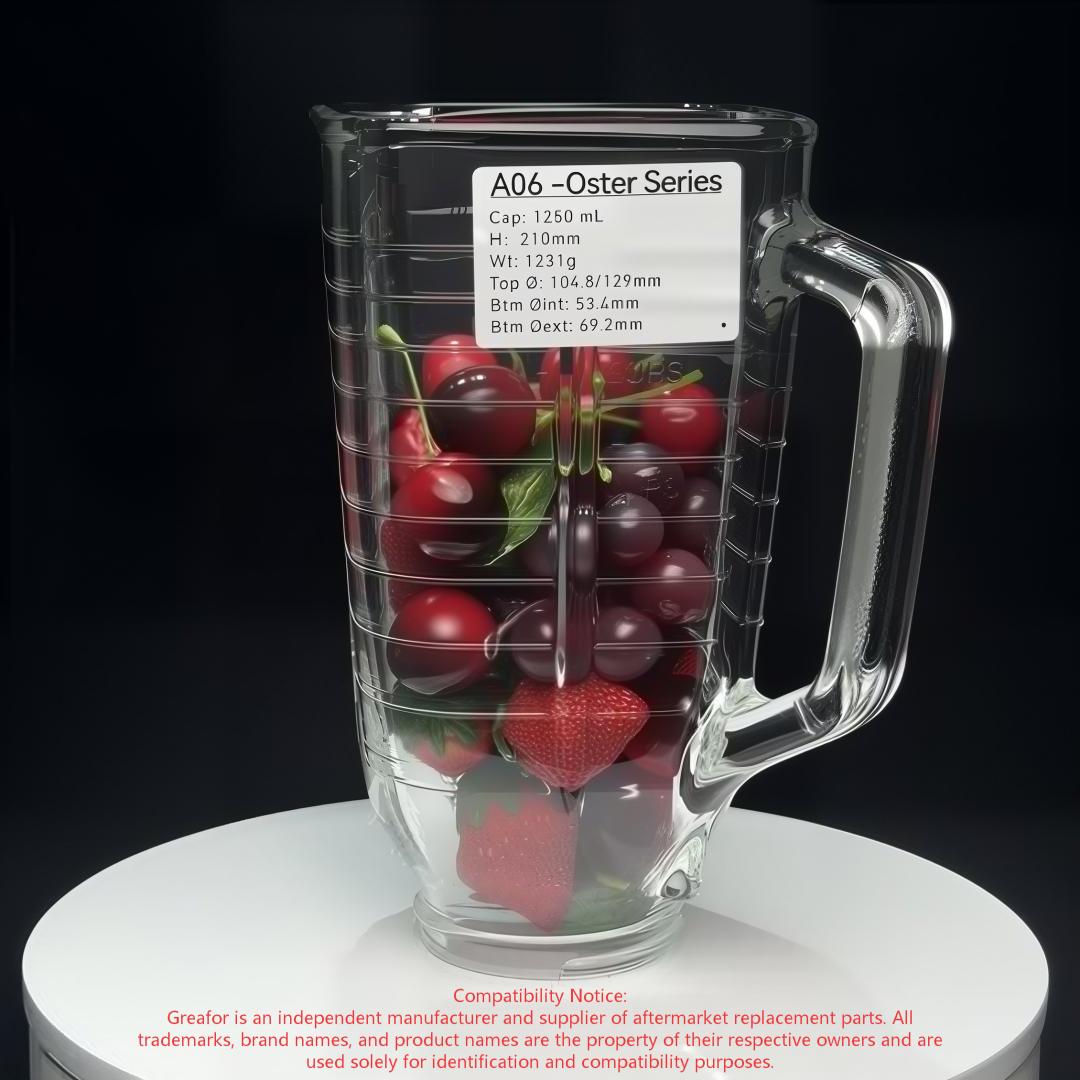
Why Blender Jar Thread Types Matter
The thread connection between the glass jar and the blade assembly is one of the most important factors in blender compatibility.
If the thread type does not match:
-
The blade assembly may not install properly.
-
The jar may leak during use.
-
The blender may become unsafe to operate.
-
Customers may return products because of compatibility issues.
For wholesalers and importers, choosing the wrong thread type can lead to product returns, inventory losses, and customer complaints. That is why thread matching is a critical step in sourcing replacement blender jars.
Common Blender Jar Thread Types
Different blender brands and model series often use different thread structures. The most common thread styles include:
Internal Thread Jars
The thread is located inside the bottom opening of the jar.
Features:
-
Widely used in household blenders.
-
Easy to install with the blade assembly.
-
Common in aftermarket replacement markets.
-
External Thread Jars
The thread is located on the outside of the jar base.
Features:
-
Strong locking performance.
-
Used in some high-power household blender models.
-
Requires precise compatibility matching.
-
Fine Thread Design
Fine threads create a tighter connection and improve sealing performance.
Features:
-
Better leak resistance.
-
Higher manufacturing precision required.
-
Common in premium blender models.
-
Coarse Thread Design
Coarse threads are easier to install and more tolerant of small manufacturing variations.
Features:
-
Faster assembly.
-
Popular in high-volume replacement markets.
-
Lower risk of thread damage.
-
How to Identify a Blender Jar Thread Type
1. Check the Bottom Opening Diameter
Measure the inner and outer diameter of the jar opening.
Key dimensions include:
-
Inner diameter.
-
Outer diameter.
-
Thread height.
-
Thread depth.
Even small differences can affect compatibility, so accurate measurement is very important.
2. Count the Thread Turns
Different jars may use:
-
Single-start threads.
-
Multi-start threads.
The number of thread turns affects how the blade assembly locks into the jar and how securely the connection holds during use.
3. Compare Thread Pitch
Thread pitch refers to the distance between thread peaks.
Two jars may look similar but still use different thread pitches, which means they are not interchangeable.
4. Examine the Blade Assembly Connection
Many compatibility issues come from the blade assembly rather than the jar itself.
When sourcing replacement jars, always compare:
-
Jar thread type.
-
Blade assembly thread type.
-
Jar base design.
Why Brand Names Alone Are Not Enough
Many buyers assume that all jars from the same brand use the same thread design. In reality, manufacturers often change thread specifications between model generations.
For example:
-
Different Oster blender models may use different jar threads.
-
Different Ninja series may use different locking structures.
-
Private-label blenders may look similar but still use different thread specifications.
For this reason, professional suppliers verify compatibility using dimensions, photos, or samples rather than relying only on model names.
Best Practice for Importers and Spare Parts Distributors
To avoid compatibility issues, we recommend sharing:
-
Product photos.
-
Jar bottom photos.
-
Blade assembly photos.
-
Existing samples.
-
Technical drawings, if available.
This information helps manufacturers identify the correct replacement solution more accurately and reduce the risk of mismatch.
OEM & ODM Compatible Blender Jar Solutions
At Greafor, we specialize in manufacturing compatible blender glass jars and replacement parts for global aftermarket and wholesale markets.
Our product range includes:
-
Compatible Blender Glass Jars.
-
Blender Blade Assemblies.
-
Blender Couplings.
-
Blender Switches.
-
Blender Lids & Accessories.
We support:
-
OEM Manufacturing.
-
ODM Development.
-
Private Label Projects.
-
Bulk Wholesale Orders.
-
Custom Packaging.
With more than 10 years of manufacturing experience, our team helps importers and distributors identify compatible jar thread types and develop replacement solutions that fit local market demand.
Why Global Buyers Choose Greafor
- 10+ Years Manufacturing Experience
- Factory Direct Supply
- OEM & ODM Expertise
- Flexible Customization Support
- Strict Quality Control System
- Thermal Shock Testing
- Stable Bulk Production Capacity
- Experienced Engineering Team
- Global Export Experience
- Fast Sample Development
- Responsive Communication
- Long-Term Supply Stability
Frequently Asked Questions
Can two blender jars look identical but have different thread types?
Yes. Similar-looking jars may still use different thread pitches, diameters, or locking structures.
Can you identify a thread type from photos?
In many cases, yes. Clear photos of the jar bottom and blade assembly can help our engineering team determine compatibility.
Do you offer custom-compatible blender jars?
Yes. We provide OEM and ODM manufacturing services based on samples or technical drawings.
What information should I send for compatibility verification?
We recommend sending product photos, dimensions, model information, and samples whenever possible.
Need Help Matching a Blender Jar?
If you are unsure about the thread type of your blender jar, simply send us photos or samples. Our team can help identify compatible replacement solutions and recommend suitable blender glass jars, blade assemblies, and related spare parts for your market.
Need Help Matching a Blender Jar?
Send photos, dimensions, or samples of your blender jar and blade assembly. Our engineering team can help identify the correct thread type and recommend compatible replacement solutions for your market.
Send Photos for Compatibility Verification