

Blender Glass Jar Compatibility Guide: How Wholesalers Match Models, Threads, Dimensions and Capacities
For wholesalers, importers, appliance spare-parts distributors, and OEM buyers, blender glass jar compatibility is a specification-control issue. Before confirming a replacement jar for bulk supply, buyers need to verify how the jar connects with the blade assembly, coupling, blender base, lid, and sealing components.
A blender jar with the same brand reference, appearance, or stated capacity may still be unsuitable for the target blender model. In a wholesale replacement-parts program, an incorrect specification can affect sample approval, production planning, inventory turnover, after-sales claims, and distributor confidence.
Buyers searching for “How do I know if a blender jar fits?” should evaluate the complete jar-to-motor connection system, not only the brand name or nominal capacity. This guide explains how procurement teams assess blender glass jar compatibility before sample approval and bulk production.
How Blender Wholesale Buyers Verify Blender Jar Compatibility
To determine whether a replacement blender glass jar is suitable for a specific blender model, compare the replacement configuration with the original jar, blade assembly, and blender base using six key specifications:
- Thread type: Thread diameter, pitch, direction, profile, and length
- Bottom diameter: Critical dimensions around the jar-to-base connection
- Blade assembly: Blade mounting, shaft, seal, bearing, and bottom structure
- Coupling: Connection between the blade assembly and motor drive
- Height: Overall jar height and clearance with the lid and blender base
- Capacity: Nominal volume and usable working volume
Brand name and capacity alone do not confirm compatibility. For wholesale replacement programs, buyers should provide the exact blender model, clear product photos, key measurements, and preferably an original sample for evaluation before confirming mass production.
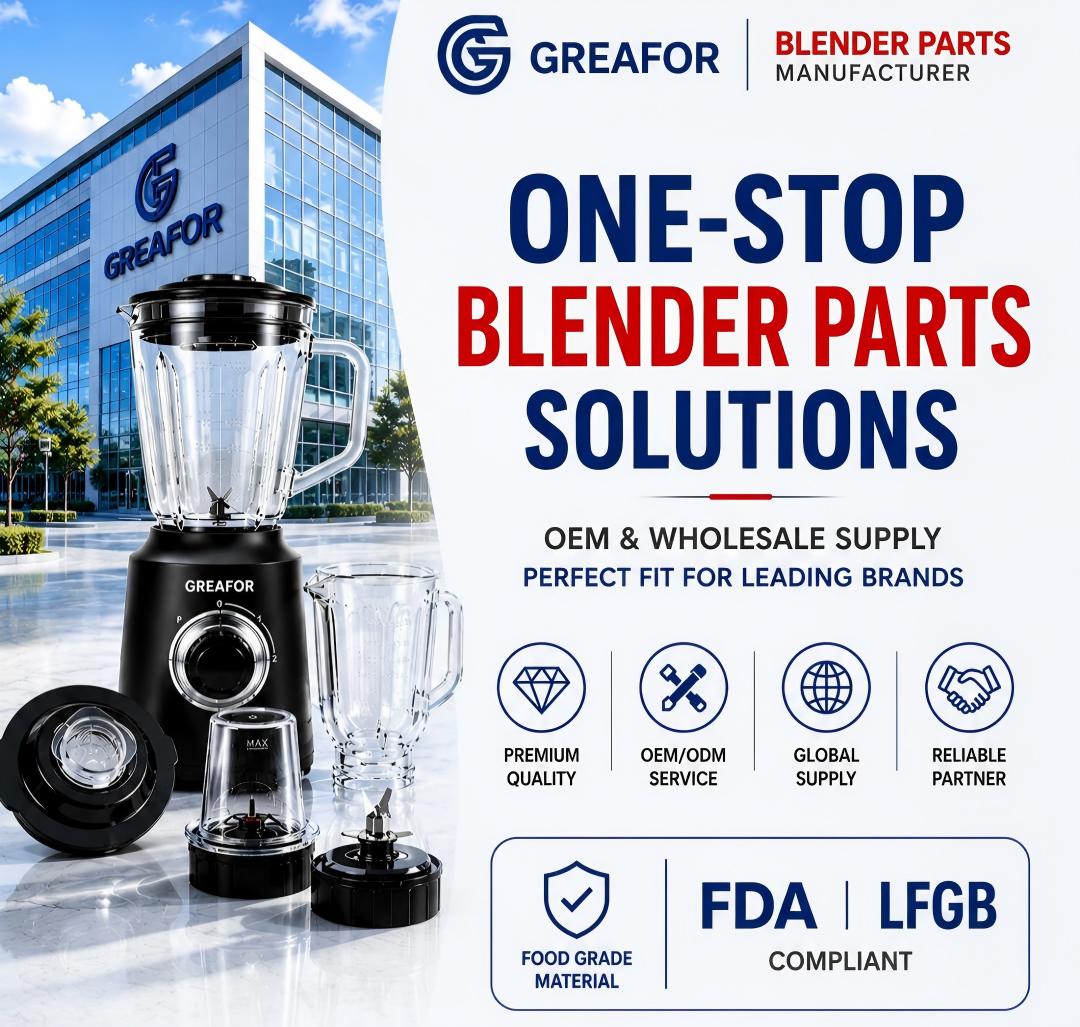
Why Compatibility Matters in Wholesale Blender Jar Sourcing
Compatibility should be treated as a technical sourcing process rather than a simple product-selection decision. A jar may look similar to the original but still fail to lock securely, seal correctly, engage the coupling, or operate with the target blade assembly.
In a bulk replacement-parts project, an incompatible blender glass jar can lead to:
- Customer complaints and return claims
- Distributor disputes and delayed deliveries
- Unsellable stock and excess inventory
- Repacking, replacement, and additional freight costs
- Interrupted aftermarket supply programs
- Lost repeat orders and reduced buyer confidence
A qualified blender glass jar manufacturer should be able to review physical connection points, compare the original design with a proposed replacement, and support sample verification before bulk production begins.
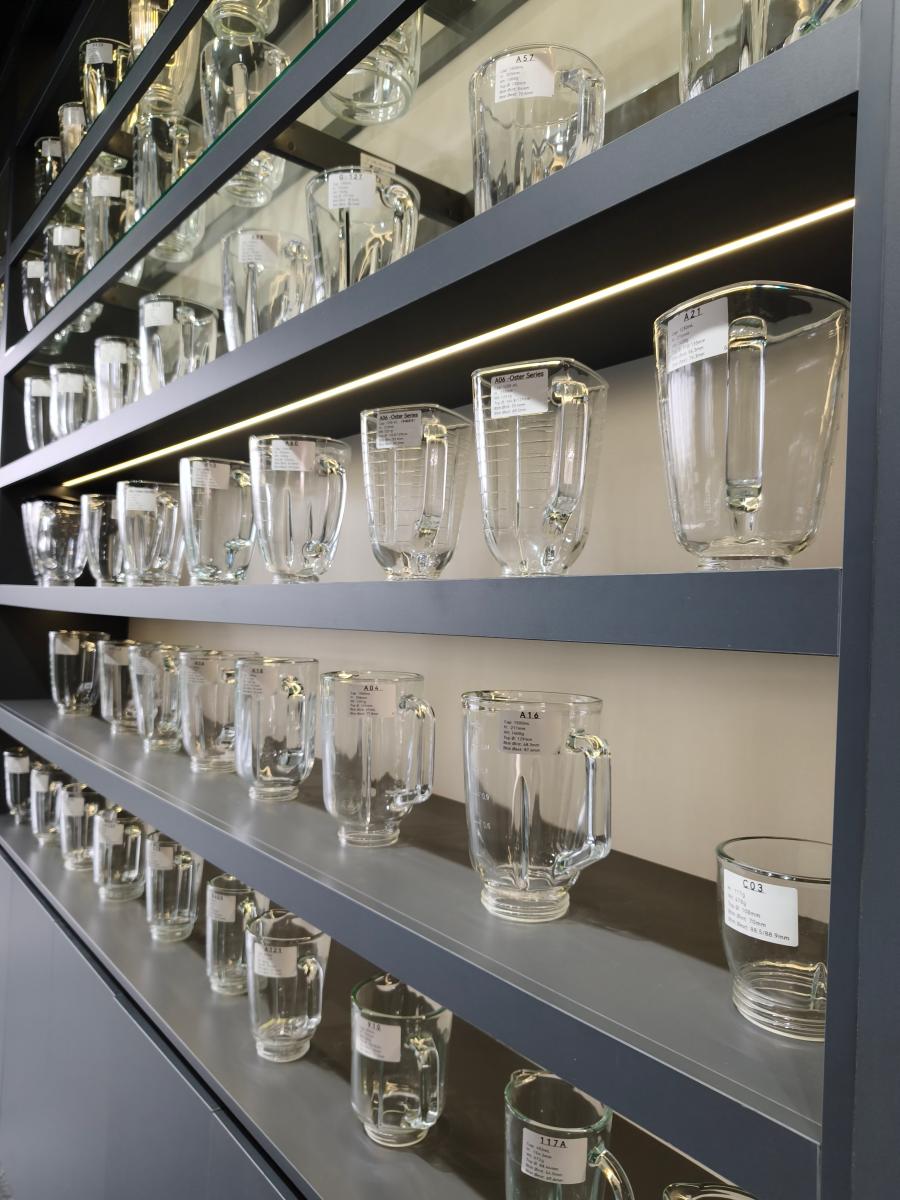
The Six Key Blender Jar Compatibility Factors
1. Thread Type
Thread type is one of the most important factors when matching a blender glass jar with a blade assembly, bottom ring, or threaded connection system. Two jars may appear almost identical while using different threads that prevent secure installation.
Wholesale buyers should check the thread diameter, pitch, direction, profile, length, number of thread starts, and thread position. If exact thread data is unavailable, provide detailed photos of the jar bottom and blade assembly, or submit an original sample for assessment.
Where a critical thread measurement cannot be confirmed, buyers should rely on sample inspection or technical comparison rather than estimated dimensions.
2. Bottom Diameter
Bottom diameter is another critical compatibility parameter. Depending on the blender design, the glass bottom diameter, bottom opening diameter, blade assembly diameter, bottom ring diameter, and blender base connection diameter may all need to be reviewed.
Two jars with the same stated capacity can use completely different bottom structures. For example, two 1.5L glass jars may have different openings, threads, blade interfaces, or locking positions. Capacity does not confirm interchangeability.
For bulk orders, compare the bottom dimensions against the original jar, blade assembly, and blender base before approving a replacement model.
3. Blade Assembly
The blade assembly is part of the complete mechanical system that connects the blender jar to the motor. A glass jar may have the correct capacity and external appearance but still be unsuitable if the blade assembly cannot be installed, sealed, or driven correctly.
Key blade assembly details include:
- Blade diameter and blade configuration
- Number of blades and blade orientation
- Blade shaft and bearing structure
- Mounting method and bottom connection
- Threaded or locking structure
- Sealing ring and leakage-control arrangement
For replacement-parts distributors, sourcing the glass jar together with matching blade assemblies, lids, seals, bases, and couplings can reduce component-matching risk and simplify inventory planning.
4. Coupling
The coupling transfers rotational power from the blender motor to the blade assembly. Coupling systems can vary by model, product generation, regional version, and blade structure.
Buyers should verify the coupling diameter, shape, number of engagement points, shaft connection, coupling height, mounting position, and rotation direction where applicable.
Even if a jar has the correct height and bottom diameter, it may not operate properly if the coupling system does not match. Compatibility should be reviewed as a complete jar, blade assembly, and motor-drive connection system—not as a glass container alone.
5. Height
Overall jar height affects lid clearance, blade position, locking alignment, and the way the jar sits on the original blender base. Even a small height deviation can affect assembly performance across a replacement-parts program.
Buyers should confirm:
- Overall height of the jar
- Height from the bottom connection to the jar opening
- Lid position and clearance
- Blade assembly position
- Clearance with the blender base
- Locking or mounting position
For accurate sourcing, provide measured dimensions from the original jar rather than relying only on product images or estimated measurements.
6. Capacity
Capacity is an important product specification, but it does not determine compatibility by itself. Common blender glass jar sizes include 500ml, 750ml, 1L, 1.25L, 1.5L, 1.75L, and 2L or above.
Jars with the same nominal capacity can have different diameters, heights, threads, bottom structures, blade assemblies, coupling systems, lids, and sealing arrangements.
Capacity tells buyers how much the jar holds. It does not confirm whether the jar will fit the target blender.
Why Brand Name and Capacity Are Not Enough
Searching by brand name and capacity can help blender jars wholesale buyers identify possible replacement options, but it should only be the first stage of the sourcing process. A single appliance brand may have multiple blender series, product generations, regional versions, jar structures, blade systems, and coupling designs.
A more reliable procurement process is:
Brand Reference → Exact Model → Physical Specifications → Sample Verification → Bulk Production
This process is significantly safer than selecting a similar-looking jar and placing a bulk order without verifying the full assembly.
Why a 1.5L Jar Is Not a Universal Replacement Specification
A 1.5L blender jar is not automatically compatible with every 1.5L blender. Capacity describes the volume of the jar, while compatibility depends on its physical and mechanical connection with the target blender system.
Two 1.5L jars can differ in thread type, bottom diameter, height, blade assembly, coupling, lid structure, and sealing components. Wholesale buyers should not use capacity as the only matching reference.
Wholesale Compatibility Verification Process
Step 1: Identify the Target Blender
Record as much information as possible, including brand reference, exact model number, product series, capacity, product generation, and target market. The exact model number is more useful than the brand name alone.
Step 2: Collect Technical Specifications
Measure or confirm the thread type, bottom diameter, blade assembly, coupling, overall height, and capacity. Where specifications are incomplete, submit photos, drawings, or an original sample rather than relying on estimated information.
Step 3: Prepare Clear Reference Photos
Useful reference photos include:
- Front and side view of the blender jar
- Jar bottom and thread area
- Blade assembly and bottom ring
- Coupling and shaft connection
- Blender base and motor-drive area
- Lid, seal, and locking positions
Step 4: Submit the Project for Technical Review
The supplier can compare the original product with a proposed replacement solution. Depending on the project, this process may include dimensional comparison, sample inspection, assembly testing, leakage testing, rotation testing, and structural evaluation.
Step 5: Approve a Compatibility Sample
Before mass production, buyers should test the proposed replacement jar with the target blender. Sample approval is especially important for new replacement programs, high-volume orders, custom glass jar development, OEM projects, and models with incomplete technical data.
Step 6: Proceed with Bulk Production
After sample approval, the project can proceed to production, quality inspection, packaging, and bulk shipment. This workflow reduces the risk of incompatible inventory and supports more stable long-term replacement-parts supply.
Technical Information Required for a Compatibility Assessment
Buyers do not need to have every technical drawing before contacting a blender glass jar manufacturer. However, providing more reference information supports a faster and more accurate compatibility review.
Target Blender Information
- Brand reference
- Exact model number
- Product series or generation
- Target jar capacity
- Target market or distribution region
Jar and Component Information
- Original glass jar photos
- Jar bottom and thread photos
- Blade assembly and coupling photos
- Blender base and motor-drive photos
- Lid, base, seal, and bottom ring photos
- Original jar, blade assembly, or relevant physical sample
Key Dimensions
- Overall jar height
- Maximum jar diameter
- Bottom and opening diameter
- Thread dimensions
- Blade assembly dimensions
- Coupling dimensions
Commercial Requirements
- Estimated order quantity or annual demand forecast
- OEM or private-label logo requirements
- Packaging and carton requirements
- Destination market and shipping requirements
- Expected delivery schedule
- Requirement for matching blades, couplings, lids, or seals
Why Original Samples Improve Compatibility Accuracy
Model numbers, drawings, and photos are useful, but they may not show every mechanical detail. Similar model names can cover different production years, regional versions, design revisions, or component updates.
An original sample allows the supplier to inspect the actual thread, bottom structure, blade interface, sealing area, and coupling connection. For wholesale buyers planning a long-term or high-volume program, submitting an original jar or component is one of the most effective ways to reduce compatibility risk before production.
OEM and Custom Blender Glass Jar Options
Compatibility projects do not always require an existing standard jar model. Depending on the project requirements and order volume, a manufacturer may support customized glass jar dimensions, capacity, jar shape, bottom structure, thread design, blade assembly, coupling, lid, sealing components, logo, and packaging.
This is useful when a target replacement jar is not covered by an existing standard product, when a distributor needs a dedicated aftermarket range, or when a brand owner is developing a private-label blender program.
Compatible Replacement Parts vs Original Parts
Buyers should distinguish between compatible replacement parts and original or officially authorized parts. A compatible blender glass jar is designed to fit and function with a specified blender configuration. It does not necessarily mean that the component is manufactured by, approved by, or officially affiliated with the original appliance brand.
Brand names and product references should be used for identification and compatibility purposes where applicable. Compatibility claims should be supported by verified dimensions, component review, assembly testing, and approved samples.
Blender Jar Compatibility Checklist for Wholesale Buyers
- Brand reference and model number confirmed
- Product generation or version identified
- Thread type checked
- Bottom diameter measured
- Blade assembly reviewed
- Coupling design checked
- Overall height measured
- Capacity confirmed
- Original jar and blender base photos provided
- Reference sample supplied where required
- Sample compatibility tested and approved
- OEM, logo, and packaging requirements confirmed
- Bulk quantity and shipment requirements agreed
If several key specifications remain unknown, request a compatibility assessment before committing to a production order or container shipment.
Frequently Asked Questions About Blender Jar Compatibility
How do wholesale buyers confirm blender jar compatibility?
Blender jars wholesale buyers normally provide the target blender model, original jar photos, key dimensions, and preferably an original sample. The supplier then reviews the thread, bottom structure, blade interface, coupling, height, and capacity before sample approval and bulk production.
Can a 1.5L glass jar replace any 1.5L blender jar?
No. A 1.5L capacity reference does not confirm interchangeability. Wholesale buyers must also verify the bottom diameter, thread design, blade assembly, coupling, jar height, lid structure, and sealing configuration.
Can a replacement blender jar be matched by brand and model only?
Brand and model information are useful starting points, but they should not be the only compatibility criteria. Different product generations or regional versions may use different jar dimensions, threads, blade systems, lids, or couplings.
Is an original sample required for a blender jar replacement project?
An original sample is strongly recommended for new compatibility projects, high-volume orders, custom development, or cases where technical drawings and model information are incomplete. It enables a more accurate review of the actual connection structure before production.
Can a supplier provide a complete blender replacement-parts set?
Depending on the wholesale project, a supplier may provide a coordinated replacement solution that includes the glass jar, blade assembly, jar base, coupling, lid, sealing ring, and related components. The final supply scope should be confirmed against the target model and approved sample.
Conclusion: Verify Compatibility Before Bulk Production
The answer to “How do I know if a blender jar fits?” is not simply the blender brand, model name, or stated capacity. Reliable matching requires review of thread type, bottom diameter, blade assembly, coupling, height, and capacity as one complete system.
For wholesalers, importers, distributors, OEM buyers, and bulk purchasers, the recommended process is:
Identify the model → Check the six compatibility factors → Provide photos or an original sample → Verify a replacement sample → Approve bulk production
This approach helps reduce compatibility risk, protect inventory investment, and establish a more reliable blender replacement-parts supply program.
Request a Blender Jar Compatibility Assessment
Planning a wholesale blender replacement-parts program, OEM project, or container order? Submit your target blender model, original jar photos, connection details, key dimensions, reference sample, estimated order quantity, and packaging requirements.
Greafor can review the required jar configuration, matching blade assembly, coupling, lid, seal, and packaging solution before sample development and bulk production.