

Blender Glass Jar, Blade and Coupling: How to Build a Compatible Replacement Set
A blender glass jar is often the first item requested in a replacement-parts inquiry. But for a wholesale distributor, importer, or aftermarket supplier, the jar is rarely the complete solution.
A replacement jar may need a matching blade assembly, coupling, lid, sealing component, or jar base before it can become a practical product for resale. If one part does not match the others, the distributor may still have an incomplete replacement solution—even when each individual component appears correct.
This is why Greafor helps distributors and importers source compatible blender replacement parts as a complete set. Instead of treating a glass jar, blade, coupling, lid, and seal as unrelated products, the relevant components can be reviewed together for the target blender model.
For many blender models, a replacement configuration may include:
Glass Jar → Blade Assembly → Coupling → Lid → Sealing Component
Not every blender requires every one of these components. However, when a distributor needs several related parts to work together, treating them as one compatible replacement configuration can make sourcing, catalog planning, and repeat supply more reliable.
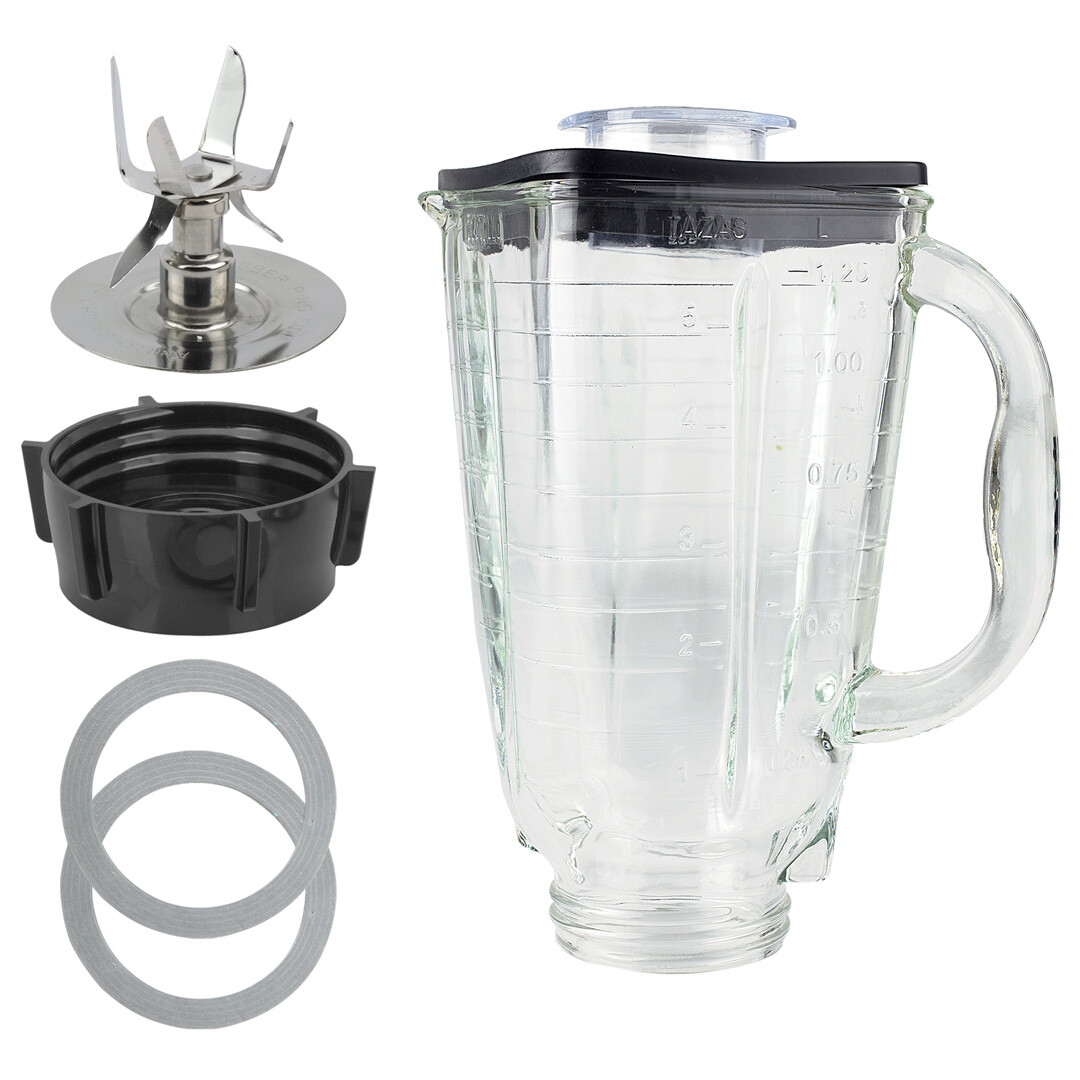
From a Single Replacement Part to a Replacement Configuration
A common sourcing request begins with a simple question:
“Do you have a replacement glass jar for this blender?”
For a wholesale program, the next questions are usually more important:
- Does the jar bottom match the required blade assembly?
- Does the blade assembly work with the original or required coupling?
- Does the coupling engage correctly with the target motor-drive system?
- Does the lid fit the jar opening and seal correctly?
- Can the related components be packed, identified, and replenished together?
If these questions are not considered early in the sourcing process, a distributor may end up with a jar from one supplier, blades from another, couplings from a third source, and lids or seals that require separate purchasing and inspection. This can create unnecessary work in model matching, sample confirmation, packaging, customer service, and repeat-order management.
The more practical B2B approach is to start with the target blender model and define the components that form the required replacement configuration.
The Five-Part Replacement Set Framework
For many household blender replacement programs, the following framework helps distributors organize related components around one model group.
1. Glass Jar
The glass jar provides the main container structure. Its capacity, height, opening, bottom design, and mounting area influence which blade assembly, lid, seal, and base configuration may be required.
2. Blade Assembly
The blade assembly must match the jar bottom and the intended sealing arrangement. It also needs to connect correctly with the coupling and motor-drive system. A blade that looks similar may still use a different shaft, base, bearing, seal position, or mounting structure.
3. Coupling
The coupling transfers rotational power between the motor and blade system. Its dimensions, engagement structure, shaft connection, and height can determine whether the replacement assembly works correctly with the target blender base.
4. Lid
The lid should match the jar opening, fitting method, and overall container design. For distributors, lids are often useful as both replacement parts and supporting items within a complete jar replacement offer.
5. Sealing Component
Seals, gaskets, and related components may appear small, but they are important to the performance of a jar and blade configuration. They should be selected according to the relevant blade base, jar bottom, lid, or mounting structure.
The purpose of this framework is not to claim that all blender models use an identical five-part structure. Its purpose is to help wholesale sourcing teams review the related components that must work together for a specific replacement requirement.
Why Set-Based Sourcing Matters for Wholesale Programs
For a distributor purchasing hundreds or thousands of units, fragmented sourcing can create a wider procurement problem.
Different suppliers may use different specifications, MOQ requirements, packaging formats, quality-control procedures, lead times, carton standards, and labeling systems. Even when each component is available, the distributor must still confirm that the parts work together.
A confirmed replacement configuration can help B2B customers:
- Reduce the number of separate sourcing tasks
- Coordinate component specifications more efficiently
- Build model-based replacement SKU groups
- Offer more complete aftermarket solutions
- Improve catalog organization and customer communication
- Support bundled or separately packed replacement options
- Plan replenishment around confirmed compatible models
The sourcing mindset changes to:
“We need a verified replacement configuration for this blender model.”
Compatibility Still Comes First
A replacement set should not be created simply by putting a glass jar, blade, coupling, lid, and seal into one carton. The components must first be reviewed against the target blender configuration.
Relevant information may include the blender model, original jar, jar dimensions, bottom structure, blade interface, coupling configuration, lid design, seal position, photos, drawings, and an original physical sample where available.
Greafor’s Blender Glass Jar Compatibility Guide for Wholesale Buyers explains the technical checks required for glass jars and associated components. This article builds on that process by focusing on what happens after compatibility is confirmed: organizing related components into a practical replacement set for wholesale distribution.
A useful sourcing sequence is:
Target Blender Model → Required Components → Compatibility Review → Sample Confirmation → Set-Level SKU Planning → Bulk Supply → Repeat Orders
How Greafor Supports Compatible Replacement Set Projects
Greafor is known for blender glass jars and related glass products, while its broader blender parts supply supports B2B customers that need more than one component for a replacement program.
Depending on the target model and project requirements, Greafor can discuss blender glass jars, grinding jars, blade-related components, couplings, lids, gaskets, seals, jar bases, compatible replacement parts, and complete replacement assemblies.
For a wholesale customer, the process may begin with a target model and a request for a glass jar. After reviewing the relevant bottom structure, blade system, coupling, lid, and sealing requirements, the discussion may develop into a broader replacement configuration.
This creates two practical sourcing routes:
| Sourcing Route | Typical Requirement | Suitable for |
|---|---|---|
| Single-Component Supply | A distributor already knows the exact required part and needs bulk quantities of one item. | Existing replacement programs, replenishment orders, and single-SKU purchasing. |
| Compatible Replacement Set | A distributor needs a glass jar together with matching blades, couplings, lids, seals, or related components. | New replacement ranges, model-based catalogs, private-label programs, and integrated aftermarket sourcing. |
The second route can be particularly useful when a wholesaler wants to reduce fragmented sourcing and develop a structured aftermarket portfolio around selected blender models.
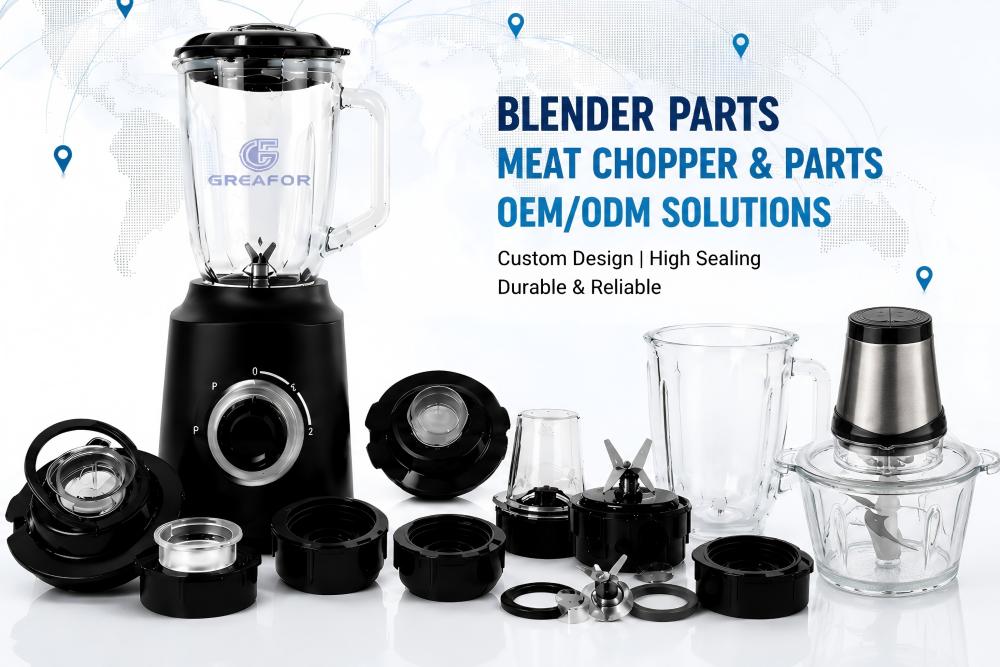
Set-Level SKU Planning for Importers and Distributors
A scalable blender parts business is not always built by carrying the largest possible number of unrelated products. It can be more effective to select a limited number of high-demand blender models and organize compatible parts around each model group.
For example, a distributor may structure its catalog around:
Model Group A: Glass Jar + Blade Assembly + Coupling + Lid + Seal
Model Group B: Glass Jar + Blade Assembly + Coupling
Model Group C: Glass Jar + Lid + Seal
This approach can improve inventory clarity, simplify downstream ordering, and make it easier for repair shops, retailers, and regional distributors to identify the correct parts for the models they serve.
It also supports different sales formats. A distributor may sell the components individually, offer a repair kit, create a complete replacement set, or develop private-label packaging for selected compatible model groups.
From Compatible Parts to Private-Label Replacement Programs
Once a replacement configuration has been verified, distributors and appliance brands can consider whether it should remain a standard compatible product offer or become part of a private-label replacement-parts program.
Private-label projects may involve custom labels, barcode requirements, retail packaging, instruction inserts, product identification, carton design, and selected component combinations. The right approach depends on the target market, sales channel, model demand, and expected purchasing volume.
For buyers developing branded accessory or replacement programs, Greafor can also discuss OEM/ODM and packaging requirements based on the approved product configuration.
One-Stop Sourcing for Blender Spare Parts Is About Procurement Coordination
One-stop sourcing for blender spare parts is not simply about finding more items in one catalog. Its value is in coordinating the purchasing process for related components.
For a compatible blender replacement set, one sourcing workflow can cover:
Target Model → Component List → Compatibility Review → Sample Approval → Packaging Plan → Bulk Production → Repeat Supply
This helps connect product matching with practical procurement requirements, including component identification, packaging, MOQ planning, quality control, replenishment, and future product-range expansion.
Learn more about one-stop sourcing for wholesale blender parts and how related products can be organized for bulk, private-label, and OEM supply programs.
Who Can Benefit from Compatible Replacement Set Sourcing?
This approach is particularly relevant for:
- Blender spare-parts wholesalers
- Appliance importers
- Aftermarket distributors
- Repair-parts suppliers
- Regional appliance distributors
- Private-label accessory businesses
- Appliance brands managing replacement-part programs
If your business already sells blender glass jars, adding matching blade assemblies, couplings, lids, and seals can create a more complete replacement offering. If you currently source related components from several factories, consolidating compatible product groups may simplify future purchasing and support a more structured spare-parts catalog.
Looking Beyond the Glass Jar
A blender glass jar may be the starting point of a replacement inquiry. For a wholesale customer, however, the larger opportunity is often the complete compatible configuration around that jar.
Greafor’s objective is not simply to supply a glass jar, a blade, or a coupling as separate products. It is to help B2B customers identify and source the compatible components required for a practical replacement solution.
Need More Than One Blender Replacement Part?
If you are sourcing blender glass jars, blade assemblies, couplings, lids, seals, or complete replacement sets, send Greafor your target blender model, required components, product photos, original samples if available, estimated quantity, and destination market.
Our team can review whether your project is best suited to individual component sourcing, a compatible replacement set, or a broader one-stop supply program for wholesale, private-label, or OEM/ODM requirements.