

Related Projects
Quality Claims and Return Rates in Blender Spare Parts: How to Minimize Risk Before Signing the Contract
A competitive price can lose its advantage when a shipment requires sorting, replacement parts, or repeated after-sales support. For blender spare parts importers and distributors, quality problems affect more than the cost of the defective item: they also tie up inventory and consume time.
The best starting point is not a supplier's promise of a low defect rate. It is a written agreement defining what will be supplied, how it will be assessed, and what happens if it does not meet the requirements.
Before signing, connect three things: measurable product requirements, an agreed verification method, and a practical claim procedure. Then track customer returns separately from confirmed manufacturing defects.
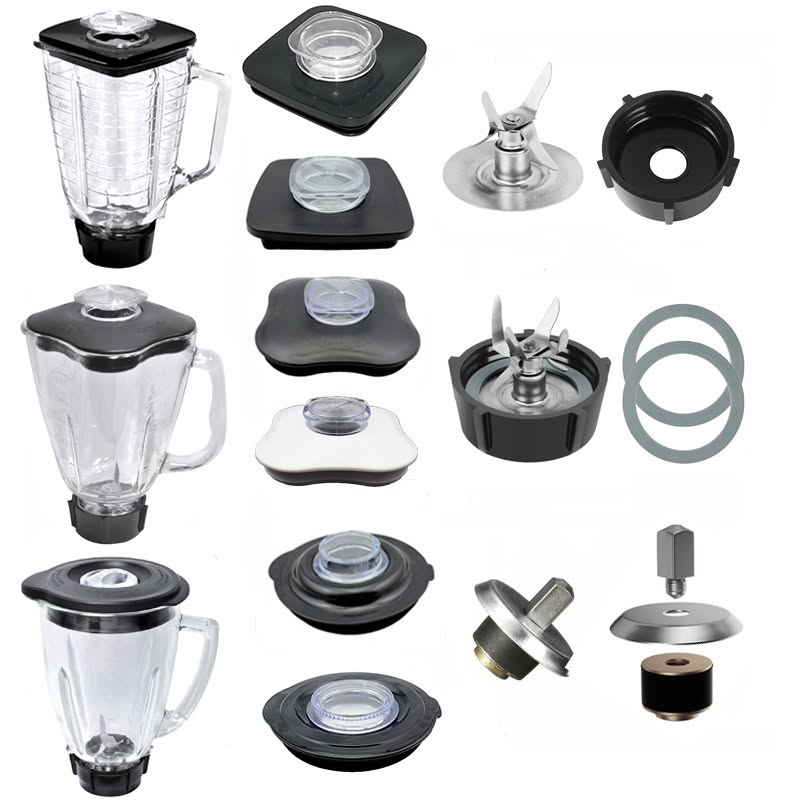
1. Turn Quality Claims into Purchasing Requirements
Statements such as “strict quality control” or “100% inspection” need clarification. Does every unit receive a visual check? Are dimensions sampled? Is leakage testing included for assembled sets?
Ask for evidence relevant to the actual order rather than relying on a general company presentation.
| Supplier claim | What to confirm |
|---|---|
| Consistent quality | The specification, reference version, and acceptance criteria used for your order |
| 100% inspection | Which characteristics are checked on every unit and which are sampled |
| Food-contact suitability | Documents covering the actual component, material, intended use, and destination-market requirements |
| Low breakage risk | The packing configuration and any agreed verification of its protective performance |
| Reliable component performance | Relevant test methods, operating conditions, and acceptance limits |
A report covering a glass jar does not automatically cover its plastic lid, gasket, or blade assembly. Check product identification and test scope before treating documentation as evidence for a complete set.
2. Separate Product Defects from Other Return Causes
A complaint describes a problem, but not necessarily its cause. A broken jar may involve manufacturing, packing, transport, or warehouse handling. A leaking set may involve the seal, assembly, installation, or an unsuitable component combination.
For investigation, separate:
- Glass jar issues: Cracks, chips, appearance defects, or deviations from agreed dimensions.
- Component performance issues: Leakage, loose assemblies, abnormal operation, or failure against specified functional requirements.
- Application issues: An incorrect supplied part, an unconfirmed compatibility claim, or customer selection and installation errors.
- Fulfillment and transport issues: Missing parts, mixed models, incorrect labels, or damage during handling.
The category does not automatically determine responsibility. Compare the evidence with the order requirements before deciding on corrective action.
For model-selection details, see our guide to checking blender spare parts compatibility before a wholesale order.
3. Put the Quality Agreement in Writing
A quality schedule attached to the purchase order can keep the requirements together. Identify its revision and agree which reference takes priority if a drawing, sample, and written description conflict.
Product Specifications and References
Identify each SKU, material, key dimensions and tolerances, supplied components, functional requirements, and packing format. Include the approved sample or drawing reference where applicable.
Avoid “same as last order” without identifying that order and any changes. The relationship between sample approval and production is explained in our approved-sample-to-bulk-shipment guide.
Defect Classification and Acceptance
Distinguish safety-related defects, functional failures, and cosmetic deviations. Use agreed photographs or reference examples where appearance judgments could differ.
Not every bubble, scratch, or dimensional variation has the same significance. Classification should reflect the agreed limits, defect location, intended use, and applicable requirements.
Inspection and Release
State who arranges and pays for inspection, when it takes place, and what happens after a failed result. Include rework, reinspection, and shipment-release responsibilities.
If using an AQL-based sampling plan, agree on the standard, lot definition, inspection level, and acceptance and rejection criteria. AQL is not a customer return-rate guarantee, and a passed sample does not establish a zero-defect shipment.
Safety-related characteristics may need separate controls and acceptance rules. Zero acceptance in a sample still does not prove that every unit in the lot is defect-free.
Changes and Remedies
Require approval for changes affecting agreed materials, components, dimensions, performance, or packing. Record the first affected batch.
Define when replacement, sorting, rework, credit, or refund may apply. Also address associated expenses: replacement parts alone may not cover freight, duties, or sorting labor. Clarify which costs require prior authorization.
Include Quality Requirements in Your Inquiry
Send Greafor your product references, quantities, destination market, and inspection or documentation needs. We can discuss the order scope before quotation and confirmation.
4. Ask for an Inspection Report That Supports a Decision
A useful pre-shipment report shows what was checked, against which requirements, and with what results. “Quality passed” alone provides little information.
The agreed report should identify:
- Order, SKU, lot, inspection date, and quantities presented and sampled
- Appearance findings against the agreed defect criteria
- Results for specified dimensions and functional checks
- Component allocation, labels, and packaging condition
- Defect counts, supporting photos, and the acceptance conclusion
The inspection scope should match the product. A visual check of a blade assembly does not establish leakage or operating performance. Likewise, checking carton condition does not replace an agreed packaging-performance test.
Document unresolved findings and who can authorize release. Clarify how inspection acceptance relates to later claims, especially for defects not reasonably discoverable during the inspection.
5. Agree on Claims Before There Is a Problem
Separate reporting arrangements for visible damage, quantity discrepancies, functional problems, and latent defects. State when each reporting period begins and what evidence is required.
A workable claim file normally includes the purchase order, SKU and batch references, quantity examined, quantity affected, photos or video, and relevant inspection or receiving records.
For functional complaints, record the assembly and test conditions. Agree whether representative samples must be retained or returned. Preserve evidence before disposal or extensive rework, except where immediate safety or legal action is necessary.
Transport damage should be assessed alongside packing evidence, the contract, delivery terms, and insurance arrangements. Neither a damaged carton nor a passed factory inspection settles responsibility by itself.
For recurring problems, request more than replacement goods. Ask what caused the issue, which batches are affected, what changed, and how the corrective action will be verified.
6. Track Return Rates on a Consistent Basis
Use a defined group of sales and a consistent observation window:
Unit return rate = Units returned from a defined sales cohort within the observation window ÷ Units sold in that cohort × 100%
For example, 30 returned jars from a cohort of 2,000 sold gives a 1.5% return rate. If eight returns are confirmed as manufacturing defects, the confirmed manufacturing-defect return rate is 0.4%.
These are illustrative figures, not Greafor performance data or an industry benchmark. They also do not measure defects that have not generated a return.
Keep separate records for confirmed manufacturing defects, application errors, transport damage, other returns, and cases still under investigation. Review them by SKU, batch, cause, and time in use.
Do not divide returns received this month by sales made this month if the returns came from earlier sales. A change in product mix or observation time can otherwise make supplier comparisons misleading.
7. Discuss Order-Specific Quality Requirements with Greafor
Greafor, the export brand of Foshan Huijing Glass Products Co., Ltd., supplies blender glass jars and related replacement components for B2B buyers.
Requirements depend on what is being purchased. A jar-only order may focus on agreed appearance, dimensions, and packing. An order containing blades, lids, and seals also needs a defined component configuration and any applicable set-level checks.
Buyers can discuss individual components or coordinated sourcing through our one-stop sourcing service. Review our blender jars and replacement parts for available product categories.
Inspection scope, documentation, testing, MOQ, and packaging options must be confirmed for the specific product and project. They should not be assumed from a general product description.
Request a Quality-Based Wholesale Quotation
Send your product model or reference, estimated quantity, destination market, required components, and packing needs. Add any material specifications, documentation requests, or inspection requirements already available.
You do not need a complete technical file to begin. Identify what is confirmed and what still needs discussion so the quotation can reflect the intended supply scope.
Define the Requirements Before Comparing the Price
Share your sourcing list with Greafor to discuss product options, component combinations, and order-specific quality requirements.
Request a Wholesale Quotation Discuss Requirements on WhatsApp
This article provides general procurement guidance, not legal advice or a product warranty. Specifications, inspection arrangements, compliance documentation, claim periods, and remedies must be agreed for each order. Compatibility references do not imply affiliation with or authorization by the original appliance brand.