

From Approved Sample to Bulk Order: How Greafor Coordinates Blender Glass Jar Production
An approved sample answers an important question: is this the right blender glass jar for the project? A wholesale order raises another: will the finished quantity follow the same agreed specification?
For importers, distributors, appliance brands, and OEM procurement teams, that difference matters. A jar can have the correct appearance but still create problems if the bulk order uses a different bottom configuration, includes the wrong matching components, or arrives without the required product identification.
Greafor supplies blender glass jars and related replacement components for wholesale and OEM projects. Moving from sample review to bulk supply means connecting the approved product with a clearly defined order, an agreed inspection scope, and packaging prepared for the intended distribution or assembly requirements.
This article explains the practical checkpoints involved—and the information wholesale customers should confirm before production is scheduled.
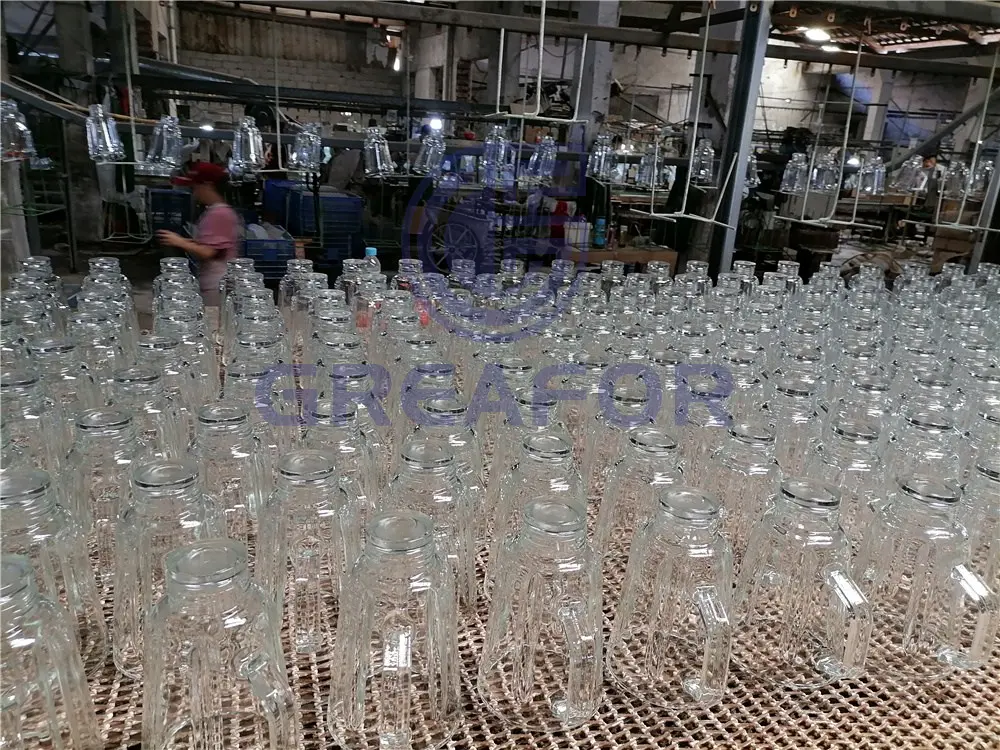
Quick Answer: What Connects an Approved Sample to a Bulk Order?
The approved sample should be supported by written product specifications, quantities by model, matching-component details, packaging instructions, and inspection requirements. Together, these references define what the factory is expected to produce and what the procurement team will review before dispatch.
A practical order workflow is:
Product Specification → Sample Approval → Order Confirmation → Production Planning → Inspection → Packaging and Quantity Verification → Dispatch Preparation
The exact arrangements depend on whether the project involves an existing replacement jar, a customized OEM design, or several glass jar models supplied with related components.
1. Define the Product Before Defining the Production Quantity
“1.5L blender glass jar” is a useful product description, but it is not a complete production specification. Two jars with the same capacity may use different threads, bottom openings, blade connections, lids, or mounting structures.
Before bulk production, the order needs to identify the required jar configuration—not simply its capacity or general appearance.
| Specification Area | What to Confirm |
|---|---|
| Product identity | Jar model, supplier reference, customer item code, and intended application |
| Dimensions and capacity | Nominal capacity, measurement points, key dimensions, and agreed dimensional requirements |
| Connection structure | Bottom opening, thread or mounting design, and blade assembly interface |
| Matching components | Required blade assembly, lid, gasket, jar base, coupling, or grinding jar |
| Glass requirements | Specified material, appearance requirements, and applicable documentation needs |
| Supply format | Individual jars, assembled items, coordinated sets, or separately packed components |
For replacement-parts projects, the original jar and associated components provide useful references. For OEM projects, drawings, samples, and agreed specifications help define the proposed design.
Procurement teams reviewing connection details can refer to the Blender Glass Jar Compatibility Guide for Wholesale Buyers . This production guide focuses on the next stage: carrying the confirmed configuration into the bulk order.
2. Make Sample Approval Specific
“Sample approved” should mean more than “the jar looks good.” The approval needs to identify which sample was reviewed, which requirements it represents, and whether any details remain open.
Depending on the project, wholesale customers may review dimensions, capacity markings, surface appearance, bottom structure, lid fit, and assembly compatibility. If the jar is supplied with a blade assembly or other matching parts, those components should be reviewed in the intended configuration.
For example, approving a glass jar body does not automatically approve a blade assembly selected later. Likewise, approving an unbranded sample does not confirm the final printed box, label, or carton layout.
Keep those approvals distinct. Product approval, component approval, and packaging approval may be connected, but they are not interchangeable.
Any changes after sample approval—such as a revised lid, different gasket, modified marking, or new packaging format—should be documented and reconfirmed before the affected work proceeds.
3. Translate the Sample into an Order That Production Can Follow
Once the product is confirmed, the purchase order needs to describe exactly what is being supplied. This becomes especially important for mixed-model projects and glass jars supplied with additional components.
Consider a purchasing program containing standard blender jars, small glass grinding jars, and matching blade assemblies. A total order quantity alone does not explain how many of each item are required or which components belong together.
The order should therefore record:
- Item code and model reference for each product
- Approved sample or drawing reference, including revisions where applicable
- Quantity for each jar model and matching component
- Whether components are assembled, bundled, or packed separately
- Packaging, labeling, and carton instructions
- Agreed inspection requirements and production schedule
A clear order also helps the importer’s receiving team. The same item references used during purchasing should make it possible to distinguish similar-looking products when the shipment arrives.
4. Keep Specification Changes Visible During Production Planning
Repeat orders can appear straightforward, but “same as last time” may hide important changes. A distributor may want a new retail box, a revised component combination, or different quantities across existing models.
Before scheduling production, separate unchanged requirements from revised ones. Identify the relevant previous reference and specify what is different in the current order.
For new OEM projects, confirm that the approved reference represents the production version rather than an earlier development sample. For multi-model projects, clarify how each item will be identified through inspection and packing.
At Greafor, production arrangements are discussed according to the product and order scope. Procurement teams should confirm model identification, component allocation, and any specification revisions as part of that discussion.
5. Agree on Inspection Scope Before the Order Is Finished
An inspection is useful only when its scope is clear. “Quality checked” does not tell a procurement team whether the review covered appearance, dimensions, assembly fit, quantities, packaging, or a combination of these.
For blender glass jars, the agreed checks may include:
- Visible damage, surface condition, and agreed appearance requirements
- Critical dimensions measured at defined points
- Jar model and approved configuration
- Matching-component fit, where included in the inspection scope
- Quantities by item and component allocation
- Packaging condition, labels, and carton identification
Wholesale customers should clarify the inspection method, acceptance criteria, available records, and how nonconforming items will be addressed. Sampling inspections and full checks are different arrangements; neither should be assumed without confirmation.
Greafor’s blender glass jar and spare parts project updates provide examples of specific supply projects and production milestones. Inspection arrangements for a new order should still be confirmed against that order’s requirements.
6. Match Packaging to the Distribution Plan
Packaging should reflect how the products will be handled after delivery. A replacement-parts wholesaler, a private-label retailer, and a local assembly operation may need different packing formats for the same jar.
Before packing begins, confirm individual protection, dividers, inner boxes, outer cartons, labels, and pallet arrangements where required. For jar sets, specify which components belong in each set and how additional parts should be identified.
Carton information should correspond with the purchasing records. Model references, quantities, and agreed shipping marks help warehouse teams receive and sort the shipment without relying on visual identification alone.
Special retail packaging or destination-specific labels should be approved separately rather than left to interpretation during final packing.
7. Confirm Dispatch Readiness and Preserve the Reorder Reference
Production completion, inspection completion, and shipment readiness are separate milestones. Before dispatch, confirm completed quantities, packaging details, agreed inspection records, shipment arrangements, and required documents.
For container shipments, the loading plan should reflect the actual packed order. For mixed-model shipments, the packing list should distinguish the relevant items and quantities clearly.
After the order is completed, retain the approved configuration, sample reference, component list, and packaging specification. These records give future replenishment discussions a defined starting point.
A repeat order can then be described as a confirmed configuration with specified changes, rather than a new search for a similar-looking jar.
What to Include in a Wholesale or OEM Inquiry
You do not need a finished technical file to begin a discussion. Send the information available and identify the details that still need review.
- Target blender model, jar reference, or intended application
- Product photos, drawings, or original sample information
- Required capacity, key dimensions, and matching components
- Estimated quantity per model
- Individual-part, assembled-set, or separate-component packing requirements
- Destination market, preferred schedule, and documentation needs
- OEM, private-label, or customized packaging requirements
This gives Greafor a clearer basis for discussing product options, sample arrangements, MOQ, inspection scope, packaging, and project-specific production planning.
Plan Your Blender Glass Jar Bulk Order with Greafor
Whether you are replenishing an established replacement model or developing an OEM glass jar, start with a clearly defined product and supply requirement.
Send Greafor your model references, product photos or drawings, required components, estimated quantities, and packaging needs. Our team can review the available information and discuss the specifications and sample approvals needed for your project.
Request a Wholesale or OEM Production Review
MOQ, production lead time, inspection arrangements, documentation, and packaging options are subject to confirmation for the specific product and order.