

Blender Spare Parts Wholesale: What Parts Should Importers Stock First?
Entering the blender aftermarket can create a valuable long-term opportunity for importers, distributors, wholesalers, appliance repair suppliers, and replacement-parts sellers. However, the first purchasing decision is often more difficult than expected: Which blender spare parts should you stock first?
A new importer may be tempted to purchase a large variety of jars, blades, couplings, lids, switches, and bases. In practice, too many unrelated models can quickly create inventory pressure, compatibility disputes, slow-moving stock, and unnecessary capital exposure.
The strongest starting strategy is usually not the largest catalog. It is a focused spare-parts range built around high-replacement-demand components and a limited number of popular blender models in the target market.
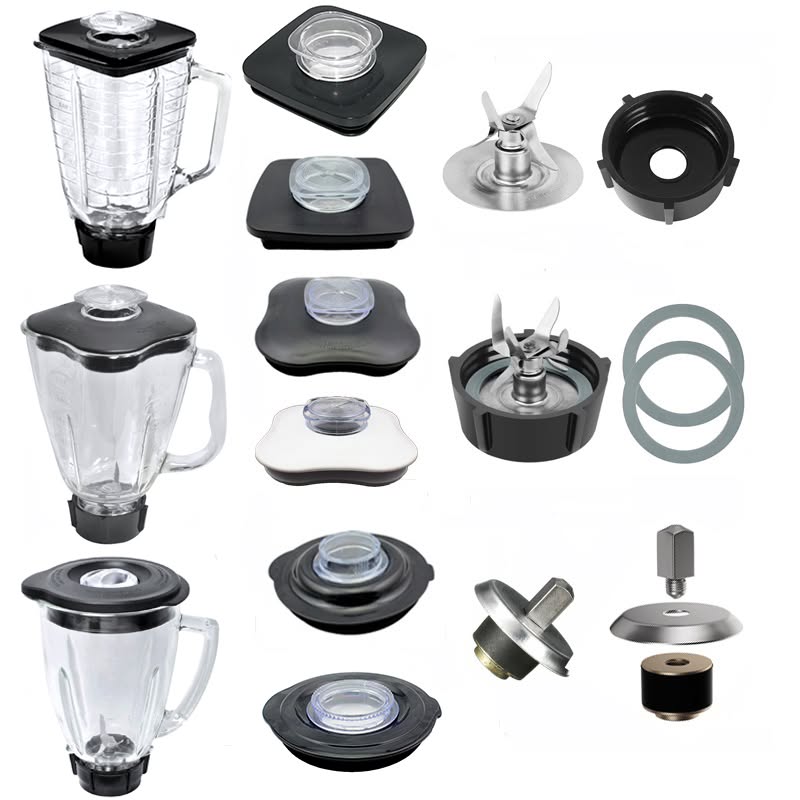
For most new blender parts distributors, the best first categories are: blender glass jars, blade assemblies, and couplings. Once those core categories are established, buyers can expand into lids, sealing rings, jar bases, switches, and other model-specific repair components.
Quick Answer: The Best Blender Parts to Stock First
Importers entering the blender replacement-parts market should normally prioritize inventory according to replacement frequency, compatibility, storage efficiency, cross-selling potential, and local repair demand.
| Blender Spare Part | Recommended Priority | Why It Should Be Considered |
|---|---|---|
| Blender Glass Jar | High | High replacement value, visible consumer demand, and strong cross-selling potential with blades, lids, and seals. |
| Blade Assembly | High | Frequently replaced mechanical component that can be sold with matching jars and seals. |
| Coupling | High | Compact, easy to store, and relevant to appliance repair and motor-to-blade connection failures. |
| Blender Lid | Medium-High | Often lost, cracked, or damaged; a useful extension for existing jar models. |
| Sealing Ring | Medium | Low-cost repair component that works well in blade and jar replacement bundles. |
| Jar Base and Bottom Components | Medium | Useful for selected model groups, but demand and compatibility can vary significantly. |
| Switches and Electrical Components | Market Dependent | Should be selected according to local voltage, repair habits, appliance design, and technician demand. |
For most first-time importers, a practical initial range is:
Blender Glass Jars + Matching Blade Assemblies + Compatible Couplings
This creates a useful replacement solution rather than a collection of disconnected parts.
Why SKU Selection Matters in Blender Spare Parts Wholesale
The blender aftermarket is different from selling complete appliances. Replacement-parts sales depend on which blender models are already in use, which components fail or wear over time, what repair shops request, and whether replacement parts can be matched accurately.
Importers are not simply purchasing products. They are building an inventory system that must balance:
- Replacement frequency and local demand
- Compatibility with established blender models
- Number of SKUs and inventory-management complexity
- Storage and shipping efficiency
- Available purchasing budget and reorder capacity
- Cross-selling opportunities between related components
- Return risk caused by incorrect model matching
A distributor may find that only a few blender models have strong household penetration in its market. In that situation, it is often more profitable to stock multiple compatible replacement parts for those high-volume models than to import dozens of unrelated parts for many low-demand models.
The key business question is not: “How many blender parts can I list in my catalog?”
It is: “Which compatible part groups can generate repeat demand with manageable inventory risk?”
Priority 1: Blender Glass Jars
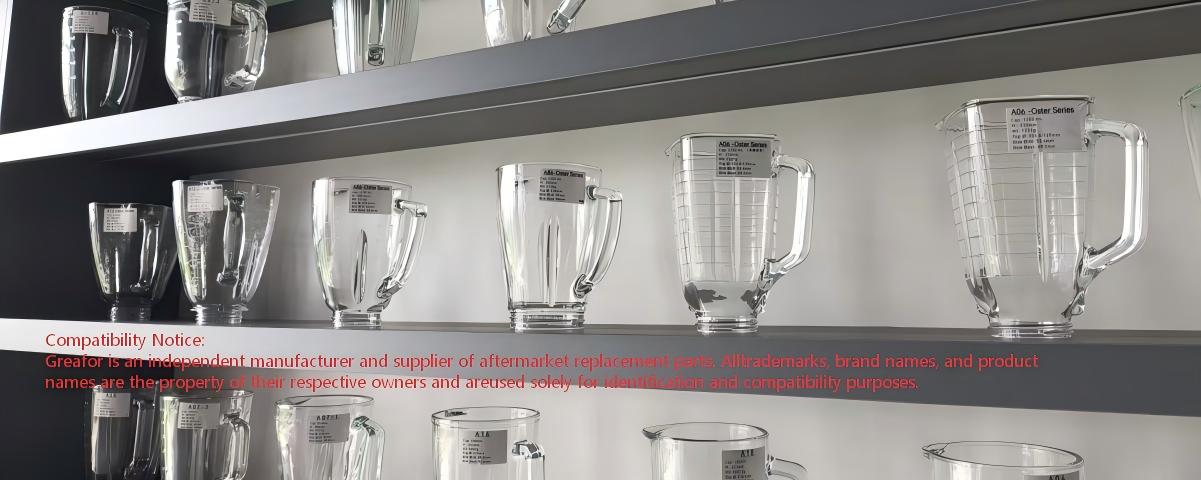
Blender glass jars are usually one of the first categories worth evaluating for wholesale replacement programs. They are visible, relatively high-value components and can be replaced when the original jar is broken, lost, worn, or no longer available through the original appliance channel.
Glass jars may require replacement because of:
- Accidental breakage during household use
- Damage during cleaning, moving, or storage
- Cracks, chips, or wear around the jar connection area
- Lost or incomplete appliance accessories
- Demand for a replacement or secondary jar
For distributors, a replacement blender jar is rarely an isolated sale. Buyers may also require a blade assembly, lid, sealing ring, bottom base, or coupling. This makes blender glass jars a useful anchor category for developing a larger replacement-parts program.
How to Select Your First Jar Models
New importers should avoid ordering too many jar shapes or capacity options at the beginning. Instead, start with models that match blenders already widely used in the target market.
Consider the following before selecting glass jar SKUs:
- Which blender brands and model groups are common in your market?
- Which capacities are most frequently sold or repaired locally?
- Are older blender models still widely used in households?
- Which replacement jars are requested by repair shops or wholesalers?
- Can matching blades, lids, seals, and couplings be sourced together?
The goal is not to stock the largest number of blender jars. The goal is to stock the right jar models with confirmed compatibility and realistic replacement demand.
Priority 2: Blade Assemblies
Blade assemblies are one of the most important categories in the blender aftermarket because they are exposed to ongoing mechanical use. Bearings, shafts, blades, seals, and mounting structures can wear or become damaged over time, creating continuing replacement demand.
Blade assemblies can be attractive for distributors because they are generally smaller and easier to store than full jars, while still serving as a high-value repair component. They can also be packaged and sold with matching jars, seals, or couplings.
Buyers should not select blade assemblies by appearance alone. A compatible blade assembly must match the target jar’s thread or bottom connection, sealing position, shaft structure, and motor-drive configuration.
Recommended Blade Inventory Strategy
Start with blade assemblies that match your core glass jar models. This allows you to create complete model-based replacement kits instead of carrying unrelated blades.
For example:
- Compatible blender glass jar
- Matching blade assembly
- Matching coupling
- Compatible lid
- Matching sealing ring
This model-group approach makes your catalog easier for repair shops, distributors, and downstream resellers to understand. It can also improve order value because customers can purchase multiple compatible components in one transaction.
Priority 3: Couplings
Couplings are small components, but they are essential to blender operation. The coupling transfers rotational power from the motor to the blade assembly. When a coupling wears, cracks, strips, or becomes damaged, the blender may no longer drive the blade correctly.
From a wholesale perspective, couplings offer several practical advantages:
- Small size and low storage requirements
- Efficient packing for bulk distribution
- Useful demand from appliance repair channels
- Natural cross-selling with blade assemblies and jars
- Potential for repeat orders in active service markets
However, couplings should never be treated as universally interchangeable. Models that appear similar can differ in shaft dimensions, engagement structure, thread design, height, material, and motor connection.
A safer approach is to select couplings based on the same compatible model groups as your glass jars and blade assemblies. This gives buyers a coherent replacement solution and reduces the risk of stocking parts that cannot be sold together.
Priority 4: Blender Lids
Blender lids are often underestimated in replacement-parts planning. However, they can be lost, cracked, damaged, or unavailable for older blenders that remain in household use.
Lids are lightweight, easy to store, and can increase the commercial value of an existing jar range. They are best added after the importer has already established core jar and blade SKUs.
Rather than stocking dozens of unrelated lid designs, select lids that fit your existing glass jar inventory. This keeps SKU management under control while giving your customers a more complete replacement option.
Priority 5: Sealing Rings and Gaskets
Sealing rings are low-cost components, but they can play an important role in repair and maintenance. They may need replacement because of leakage, wear, aging, deformation, cleaning damage, or loss during servicing.
For distributors, sealing rings are often most effective as supporting inventory rather than a standalone core category. They are especially useful when sold with matching blade assemblies or jars.
Common bundled options include:
- Blade Assembly + Sealing Ring
- Blender Glass Jar + Blade Assembly + Sealing Ring
- Blender Glass Jar + Lid + Blade Assembly + Seal
These bundles simplify purchasing for repair shops and help distributors offer a more complete service solution without adding excessive SKU complexity.
Priority 6: Jar Bases and Bottom Components
Jar bases, bottom rings, and related bottom components can have aftermarket potential, particularly for selected high-volume blender models. However, these parts often vary significantly by jar design, blade system, thread structure, and locking method.
For this reason, they should usually be added after the importer has sales data for core replacement jars, blades, and couplings.
Before adding base components, evaluate:
- Requests from repair shops and existing customers
- Popularity of the relevant blender model group
- Confirmed matching relationship with jars and blades
- Required packaging and storage space
- Expected reorder potential
Priority 7: Switches and Electrical Components
Switches can be valuable in markets with active appliance repair networks, but they are not always a first-priority category for every importer.
Electrical components should be selected based on local repair demand, voltage requirements, appliance design, electrical standards, technician preferences, and the models most common in the target market.
Before importing switches in volume, speak with repair shops, service technicians, appliance wholesalers, and existing customers. Their requests can provide more useful demand signals than selecting switch models based only on product appearance or unit price.
The Smartest First Inventory Strategy
New importers should generally avoid this approach:
50 models × small quantities × unrelated parts
Although a large catalog may appear attractive, it can create complicated inventory management, unclear compatibility references, slow-moving stock, and difficulty explaining product selection to customers.
A more practical strategy is to select a limited number of high-demand blender model groups and build several matching replacement parts around each group.
For example:
| Model Group | Recommended First Parts |
|---|---|
| Model Group A | Glass Jar + Blade Assembly + Coupling + Lid + Sealing Ring |
| Model Group B | Glass Jar + Blade Assembly + Coupling |
| Model Group C | Glass Jar + Blade Assembly + Lid |
This strategy creates several important advantages:
- Lower SKU complexity
- Easier model matching and customer support
- Stronger cross-selling opportunities
- More organized catalogs and price lists
- Better use of inventory capital
- Higher potential order value per customer
- A clearer foundation for repeat orders
How to Choose the Right Blender Models for Your Market
The best inventory is determined by the blender models already in use in your local market. Before placing a wholesale order, blender part importers should carry out basic market validation.
1. Identify Popular Blender Brands and Series
Review which household blender brands and product series are commonly sold, repaired, or requested in your market. Focus on products with a meaningful installed base, rather than only the newest models currently available at retail.
2. Look for Older Blenders Still in Use
Older appliances often create strong replacement demand. Many consumers and repair businesses prefer replacing a jar, blade, lid, or coupling instead of purchasing a complete new blender.
3. Speak With Repair Shops
Repair technicians can provide direct insight into which components fail, which models are difficult to service, and which replacement parts customers request most often.
4. Review the Availability of Original Parts
Where original replacement parts are difficult to source, compatible aftermarket components may offer a stronger commercial opportunity—provided that compatibility is confirmed accurately.
5. Use Existing Customer Inquiries as Data
If you already operate as an importer, wholesaler, appliance retailer, or repair-parts supplier, review past inquiries and customer requests. These records can reveal repeated demand for specific jar types, blade structures, lids, or couplings.
Five Mistakes New Blender Parts Importers Should Avoid
Mistake 1: Buying Too Many Models Too Early
A large number of SKUs does not automatically create a strong parts business. Begin with the best compatibility opportunities in your market and expand after reviewing actual sales and reorder data.
Mistake 2: Ignoring Compatibility Details
Similar-looking jars, blades, and couplings may have different dimensions, threads, shaft structures, or connection systems. Confirm compatibility before placing an order.
Mistake 3: Purchasing Parts Without a Model-Group Strategy
A jar, blade assembly, coupling, lid, and sealing ring can create much more commercial value when selected as a compatible product group. Avoid building an inventory of isolated parts that cannot be easily sold together.
Mistake 4: Selecting Only by Unit Price
The lowest-priced part is not always the best purchasing decision. Consider replacement demand, shipping efficiency, compatibility, packaging, customer-claim risk, and potential for repeat orders.
Mistake 5: Ordering Large Quantities Before Market Validation
For a new market or new product category, start with carefully selected high-demand models. Use sales performance, repair-shop feedback, and buyer requests to guide future expansion.
Recommended Starter Inventory for New Distributors
A practical first purchasing structure may look like this:
Core Inventory: High Priority
- Blender Glass Jars
- Matching Blade Assemblies
- Compatible Couplings
Expansion Inventory: Medium-High Priority
- Blender Lids
- Additional jar models for proven high-demand model groups
Supporting Inventory: Medium Priority
- Sealing Rings and Gaskets
- Jar Bases and Bottom Components
- Selected repair accessories
Market-Specific Inventory
- Switches
- Electrical components
- Specialized repair parts
- Model-specific accessories requested by local repair channels
This structure helps new importers begin with the replacement parts most likely to create a functional aftermarket range, while maintaining control over purchasing budget and SKU complexity.
Work With a Supplier That Understands Compatibility
Selecting a blender spare parts supplier involves more than finding a factory that can produce individual components. A suitable B2B supplier should be able to support buyers with model references, compatibility review, sample evaluation, coordinated part selection, OEM/ODM development, packaging, and long-term bulk supply planning.
Greafor supports wholesale buyers with blender glass jars, blade-related components, couplings, lids, sealing parts, meat chopper glass bowls, and compatible replacement solutions. For replacement projects, the objective is to help buyers build product groups around confirmed compatibility requirements rather than simply offering unrelated spare parts.
Start With the Right Blender Spare Parts
The best first inventory for a blender parts distributor is not necessarily the biggest inventory. It is a focused selection of products with strong replacement demand, clear model compatibility, cross-selling potential, and manageable inventory risk.
For most importers entering blender spare parts wholesale, the recommended starting point is:
Blender Glass Jars + Blade Assemblies + Couplings
Then expand gradually into lids, sealing rings, jar bases, and market-specific repair components based on confirmed demand and sales data.
By building a structured inventory around a limited number of high-demand compatibility models, distributors can reduce unnecessary SKU risk and create a stronger foundation for repeat sales in the blender aftermarket.
Build Your Blender Spare Parts Inventory With Confidence
Looking for compatible blender replacement parts for your local market? Send Greafor your target brands, blender models, product photos, estimated order quantity, and destination market. Our team can help review suitable blender glass jars, blade assemblies, couplings, lids, seals, and related product combinations for wholesale purchasing.