

How to Build a Private Label Blender Accessories Program
A private label blender accessories program should start with high-demand replacement parts, verified model compatibility, clear OEM specifications, branded packaging, MOQ and landed-cost planning, batch quality control, and repeat-order supply. For brand owners, distributors, and importers, this approach can create additional revenue, strengthen customer retention, and improve margins without requiring a completely new product category.
Blender jars, glass containers, blades, lids, seals, grinding cups, and other replacement components can all become part of a private-label portfolio. Instead of sourcing every accessory separately, buyers can work with an experienced blender accessories manufacturer to develop products, packaging, specifications, and supply plans under their own brand.
But building a successful program involves more than putting a logo on a product. Compatibility, material quality, packaging, MOQ, quality control, and long-term supply stability all need to be considered before the first bulk order. This guide covers the key steps.
Quick Checklist: Private Label Blender Accessories Program
| Step | What to Confirm | Why It Matters |
|---|---|---|
| 1. Product range | Which accessories have proven demand in your market? | Starts the range around actual replacement needs |
| 2. Specifications | Dimensions, capacity, material, blade config, lid design | Prevents fitment failures before production |
| 3. Supplier | Factory vs. trading company, OEM capability, QC process | Determines long-term program viability |
| 4. Branding & packaging | Logo, printed boxes, labels, carton design | Turns a generic part into a branded product |
| 5. Compatibility database | Which blender models each SKU fits | Reduces customer confusion and returns |
| 6. MOQ & landed cost | Total cost, not just factory unit price | Protects margin across the full program |
| 7. Samples & pilot order | Fit, quality, packaging, branding confirmation | Validates before committing to bulk |
| 8. Quality control | Batch-to-batch consistency | Protects brand reputation |
| 9. Inventory planning | Core, growth, and special-order SKU tiers | Reduces stock risk while maintaining availability |
| 10. Long-term program | Consistent naming, SKU structure, quality standards | Builds repeat purchasing from installed base |
1. Start With the Accessories Your Market Actually Needs
The first step is deciding which blender accessories should be included in your private-label range. Not every accessory has the same demand or replacement cycle.
For many distributors and appliance brands, frequently requested items include:
- Blender glass jars and replacement jars
- Blender lids and covers
- Sealing rings and gaskets
- Blades and blade assemblies
- Grinding cups
- Blender jar bases and related components
- Other replacement accessories for specific blender models
Start with products that already have proven demand. If your customers frequently ask for replacement glass jars, developing a private-label jar range makes more sense than launching ten unrelated accessories at once. You can then expand the range based on sales data and customer feedback.
Key principle: Build the product range around actual replacement demand rather than simply choosing the largest possible catalog.
2. Define Your Product Specifications Before OEM Production
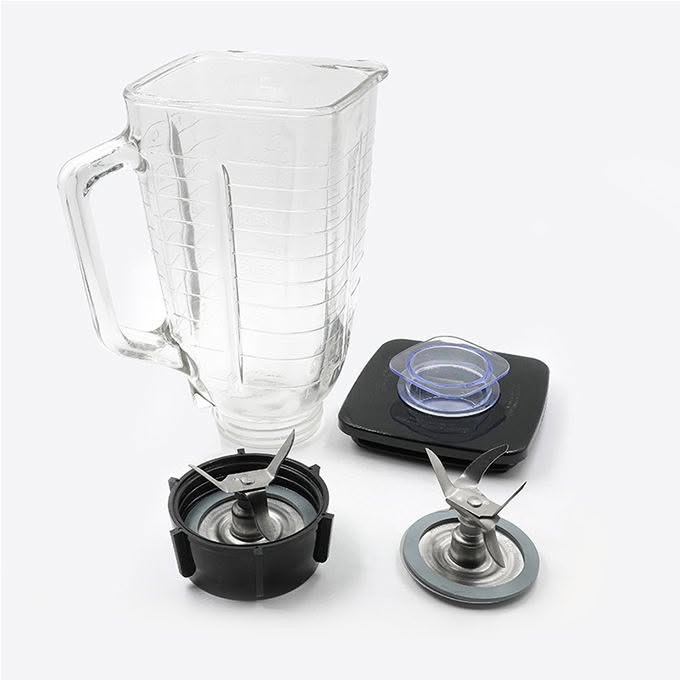
Once you know which accessories you want to sell, define the specifications clearly. For OEM blender parts, this can include:
- Product dimensions and capacity
- Glass or other material requirements, thickness, weight
- Blade configuration and lid design
- Sealing structure, color, and finish
- Packaging requirements
- Applicable blender models
This is particularly important for replacement products. A blender jar may look similar to another jar, but differences in diameter, height, base structure, blade connection, or lid design can determine whether the product fits a specific blender. The manufacturer should confirm technical specifications before mass production.
A professional supplier should be able to review drawings, samples, product photos, dimensions, or existing model information and help determine the appropriate production solution.
3. Choose a Blender Accessories Manufacturer, Not Just a Trading Supplier
The supplier you choose can directly affect your private-label program's long-term profitability. When evaluating a manufacturer, look beyond the lowest quotation.
- Does the supplier have its own production facility?
- Can it support OEM or private-label requirements?
- Can it provide product samples before bulk production?
- Can it maintain consistent specifications between batches?
- What materials and quality standards can it support?
- Can it handle custom packaging?
- What is the MOQ for each product?
- Can it support repeat orders?
- Can multiple accessories be sourced from the same factory?
- How does the supplier handle quality inspection?
Working directly with a factory can also simplify communication between product development, production, packaging, and quality control. The goal is not simply to find a supplier who can produce one order—it is to build a supply relationship that can support your private-label product line as it grows.
If you are also evaluating supplier capability, quality control, sample approval, and MOQ, read our guide to choosing a reliable blender parts manufacturer in China.
4. Develop Your Brand Identity Across the Product and Packaging
Private labeling works best when the product and packaging feel like part of the same brand. Your brand identity can be applied across different parts of the supply chain:
- Product logo or branding, product color
- Printed packaging, carton design, product labels
- Instruction materials, barcode and SKU information
- Inner packaging and outer shipping cartons
Custom packaging is especially useful for distributors and brand owners because it helps transform a generic accessory into a branded product that can be presented consistently across retail, distribution, and aftermarket channels.
However, packaging should also be practical. A good packaging solution needs to balance brand presentation, product protection, shipping efficiency, and cost. For glass blender jars, packaging protection is particularly important because the product needs to withstand handling and international transportation. A design that looks attractive but provides insufficient protection can create unnecessary breakage, returns, and customer complaints.
5. Build a Product and Model Compatibility Database
One of the biggest challenges in the blender accessory business is compatibility. If your private-label product is designed as a replacement accessory, your customers need to know exactly which blender models it fits.
Instead of describing a product only as a "replacement blender jar," build a structured compatibility database. For example:
| Brand | Model | Accessory | SKU | Capacity | Notes |
|---|---|---|---|---|---|
| Brand A | Model 01 | Glass Jar | SKU-001 | 1.5L | Standard lid |
| Brand A | Model 02 | Glass Jar | SKU-002 | 1.7L | Different base |
| Brand B | Model 03 | Grinding Cup | SKU-003 | 300ml | With lid |
This information can then be used for distributor catalogs, sales sheets, product listings, customer service, wholesale quotations, online stores, and internal purchasing systems. A well-organized model database can become a competitive advantage because buyers can quickly identify the right accessory instead of repeatedly asking the supplier for compatibility information.
Buyers building an aftermarket catalog can also review our Compatible Blender Models and Brand Reference Guide to understand how jar, blade, lid, base, and coupling matching should be checked before a bulk order.
Planning a private-label blender accessory range? Send your target products, model references, estimated quantity, logo and packaging needs, and target market. The factory can review the details and recommend the most practical OEM and supply plan.
6. Calculate MOQ and Landed Cost Before Launching
MOQ is one of the most important factors in private-label sourcing. Private-label products normally require additional work compared with standard products—packaging design, printing, labeling, product customization, and production planning. Buyers should calculate the complete cost structure before launching a new SKU.
Consider the full equation:
Product cost + custom packaging + tooling or setup cost + inspection + inland logistics + international freight + import costs = landed cost
Do not evaluate a private-label project based only on the factory unit price. A slightly higher product price may still produce better margins if the supplier provides more stable quality, lower packaging waste, fewer defects, and more reliable delivery.
For larger distributors, it can also make sense to negotiate a product portfolio rather than treating every SKU independently. Several accessories planned under the same private-label program allow packaging specifications and purchasing schedules to be managed together.
7. Start With Samples and a Pilot Order
Before committing to a large private-label order, request samples. The sample stage should confirm:
- Product dimensions, material, and appearance
- Fit and compatibility with actual blender models
- Functional performance
- Packaging structure and branding details
- Labels and SKU information
For replacement accessories, test the product with the actual blender models used in your market whenever possible. After sample approval, a pilot or initial bulk order provides another opportunity to evaluate production consistency, packaging performance, and shipping conditions. Only after these points are confirmed should the product move into a larger purchasing program.
8. Establish Quality Control for Every Production Batch
Private-label products carry your brand name. Quality problems are not simply supplier problems—they can become brand problems.
A clear quality-control process should cover incoming materials, production, finished products, and packaging. Depending on the product, inspection may include:
- Dimensions and tolerances
- Glass appearance and defects, product weight
- Assembly, blade and component condition
- Lid and sealing performance
- Packaging quality, quantity, and carton labeling
For glass products, manufacturing processes such as forming, annealing, cutting, grinding, polishing, washing, inspection, and packing need to be controlled consistently. The objective is simple: the second bulk order should perform like the first. Consistency is one of the most important requirements for a long-term private-label program.
9. Plan Inventory Around Your Best-Selling SKUs
Private labeling does not mean every SKU needs to be stocked in large quantities. A better strategy is to divide products into different inventory levels:
- Core SKUs: High-demand accessories that should remain available regularly.
- Growth SKUs: Products with increasing demand that require closer inventory monitoring.
- Special-order SKUs: Less frequently requested products that can be purchased according to confirmed customer orders.
This approach helps distributors reduce unnecessary inventory while maintaining availability for their most important products. It also provides a clearer purchasing plan for the factory.
10. Turn Accessories Into a Long-Term Brand Program
The ultimate goal of private labeling is not simply to sell a customized product. It is to build a recognizable product range. Once several accessories are established, you can gradually create a complete private-label blender replacement program with consistent:
- Product naming and SKU structure
- Packaging and quality standards
- Compatibility information
- Sales materials and carton labeling
This makes it easier for distributors and importers to present the products as one professional product family. It also creates repeat purchasing opportunities because replacement accessories naturally connect with the installed base of blender products already in the market.
What Should You Ask a Private Label Blender Accessories Supplier?
Before starting a project, brand owners and distributors should ask the manufacturer:
| Question | Why It Matters |
|---|---|
| Can you manufacture accessories under my brand? | Confirms OEM/private-label capabilities and customization options |
| What is the MOQ for each SKU? | MOQ varies by product type, packaging, and customization level |
| Can you provide samples before bulk production? | Samples let buyers verify specifications and compatibility |
| Can you provide custom packaging? | Covers printed boxes, labels, cartons, inserts |
| Can you support multiple accessory categories? | One supplier for jars, blades, lids, and seals simplifies sourcing |
| How do you control quality? | Inspection procedures, production controls, batch consistency |
| Can you support repeat orders? | Private-label programs require reliable long-term supply |
How Greafor Supports Private Label Blender Accessories
Greafor works with importers, distributors, wholesalers, and appliance brands looking to develop and source private label blender accessories from China. Our product range includes blender glass jars, replacement accessories, meat chopper glass bowls and related parts, as well as complete blender and meat chopper units.
For private-label projects, buyers can discuss product specifications, OEM requirements, packaging, model compatibility, and bulk-order planning directly with the factory team. The objective is to provide a more efficient sourcing solution: one manufacturing partner for a wider blender accessory program instead of managing multiple small suppliers.
For buyers developing a new private-label line, the process can start with product selection and samples, followed by specification confirmation, packaging development, quality inspection, and bulk production.
Frequently Asked Questions
What are private label blender accessories?
Blender-related products manufactured by a supplier and sold under the buyer's own brand. They can include glass jars, lids, blades, seals, grinding cups, and other replacement components.
Which blender accessories are best for private label?
Start with high-demand replacement parts such as glass jars, blades, lids, and sealing rings. Products with proven replacement cycles in your target market are usually the strongest foundation for a private-label range.
Can blender accessories be customized with my brand?
Yes. Depending on the product, customization can include branding, product specifications, colors, labels, packaging, and SKU information. Confirm available options with the manufacturer before starting development.
What affects the MOQ for private label blender accessories?
MOQ depends on product type, customization level, packaging, mold requirements, and production planning. Standard replacement parts generally have lower MOQs than fully customized OEM products.
How do I confirm blender accessory compatibility?
Provide the exact model number, photos of the original part, dimensions, and if possible an original sample. The manufacturer should verify thread structure, blade interface, coupling, and sealing area before confirming a replacement.
What should I prepare before contacting a manufacturer?
Prepare the target product, dimensions or model information, estimated order quantity, target market, branding requirements, and packaging preferences. Existing samples, drawings, or product photos can help the manufacturer evaluate the project more efficiently.
Related Articles
- How to Choose a Reliable Blender Parts Manufacturer in China—Foundation guide covering supplier evaluation, factory verification, and sourcing strategy.
- How to Check Blender Spare Parts Compatibility Before a Wholesale Order—Deep dive into model matching, dimensional checks, and sample testing.
- OEM vs Compatible Replacement Blender Parts: Which Is Better for Distributors?—Commercial decision framework comparing OEM, private-label, and compatible product strategies.
- Blender Spare Parts Wholesale: What Should Importers Stock First?—Inventory planning and demand analysis for building a replacement-parts catalog.
- How South American Distributors Build a Reliable Blender Spare Parts Supply Chain from China—Market-specific supply chain guide with real B2B sourcing scenarios.
Start Your Private Label Blender Accessories Program
If you are a brand owner, distributor, or importer planning to launch or expand a private-label blender accessories range, start by defining your target products, models, quantities, and packaging requirements. Greafor can help evaluate the product requirements and develop a suitable bulk-supply solution.
Send us:
Target Products + Model References + Estimated Quantity + Logo/Packaging Needs + Target Market