

Related Projects
How Importers Choose Replacement Glass Bowls for Meat Choppers
A replacement meat chopper glass bowl is not just a container. It needs to work with the appliance base, blade assembly, lid, and sealing arrangement.
That is why two bowls with the same capacity and a similar shape can still be very different products. One may assemble correctly with the original appliance. The other may have a different bottom interface, blade clearance, or lid profile—and become difficult to sell once it reaches your warehouse.
For importers, wholesalers, replacement-parts distributors, and kitchen appliance brands, the useful question is not simply “Can you supply a 1.5L glass bowl?” It is: Which bowl specification will work with the product we intend to supply?
Greafor, the export brand of Foshan Huijing Glass Products Co., Ltd., has manufactured glass components for kitchen appliances since 2012. With 14 years of experience, we work with B2B buyers on meat chopper glass bowls, blender glass jars, compatible replacement parts, and OEM/ODM projects.
This guide explains the checks that matter most before a replacement bowl is quoted, sampled, or ordered in bulk.

1. Start With Capacity—Then Check the Rest of the Bowl
Capacity is usually the first specification buyers compare. It is a useful starting point, but it does not define the product.
A bowl listed as 1.5L may have a different usable filling level, overall height, rim diameter, or bottom geometry from another 1.5L bowl. Any of those differences can affect how it fits the appliance or how it is presented in your product range.
Before requesting a quotation, clarify:
-
Nominal capacity, such as 1.0L, 1.5L, or 2.0L
-
Usable capacity required by the appliance design
-
Bowl height, maximum diameter, and bottom diameter
-
Bowl profile: straight-sided, rounded, or another specified shape
-
Intended use: meat, vegetables, garlic, nuts, spices, or general food preparation
A larger bowl is not automatically a better replacement. If its height or bottom shape differs from the original, it may interfere with the lid, blade assembly, or appliance base.
For buyers managing several models, keep a simple specification sheet for each bowl. It prevents similar-looking products from being mixed during purchasing, packing, and inventory management.
If you have the original bowl, send its dimensions, photos, or a technical drawing with your inquiry. This is usually faster than describing the requirement in words.
2. The Motor Interface Decides Whether the Bowl Fits
The connection between the bowl and the appliance base is often the first point where a replacement project succeeds or fails.
Depending on the design, the bowl may connect through a dedicated bottom structure, locking feature, coupling arrangement, or another mechanical interface. A bowl with the right capacity can still be unsuitable if its bottom profile does not align with the base.
Ask the supplier to review:
-
Bottom diameter and overall bottom profile
-
Position and shape of locating or locking features
-
Interface dimensions and tolerances
-
Bowl seating and alignment with the appliance base
-
Clearance around the blade assembly and related components
Photos help, but they do not always show enough detail. Where the bottom structure is critical, provide a physical sample, technical drawing, or measured dimensions.
For an OEM project, agree on the interface requirements during product development—not after the sample has already been approved.
Compatibility should be confirmed against the actual appliance design. A supplier should not confirm a fit based only on a similar appearance or the same nominal capacity.
3. Review the Bowl and Blade Assembly Together
The glass bowl is one part of a food chopper system. The blade assembly, central shaft, sealing components, and bowl structure all need to work together.
Before ordering a replacement bowl, confirm which blade assembly will be used and whether existing components can be reused.
Key points include:
-
Blade assembly dimensions and overall height
-
Central shaft and mounting configuration
-
Position of the blade assembly within the bowl
-
Clearance between the blades and the bowl’s inner surface
-
Seal or gasket requirements at the relevant connection points
-
Any bowl-specific locking or mounting features
A bowl that fits the appliance base may still be unsuitable if the blade assembly does not align correctly. Likewise, a blade set that looks compatible should not be assumed to work with a different bowl without verification.
For a new OEM project, review the bowl, blade assembly, lid, and base as one coordinated system.
For an aftermarket replacement program, send the original bowl and blade assembly together whenever possible. This gives the supplier the information needed to assess the required fit.
Explore Greafor’s meat chopper glass bowl range for wholesale and OEM sourcing options.
4. Confirm the Lid as Part of the Same Set
The lid is easy to overlook until the sample arrives.
Different food chopper designs use different lid shapes, rim profiles, locking arrangements, and central openings. A replacement bowl may fit the appliance base but still not work with the original lid if its rim diameter or upper profile differs.
Before ordering, check:
-
Bowl rim diameter and profile
-
Lid seating depth and contact area
-
Lid locking or positioning structure
-
Clearance for the blade shaft or other components
-
Whether the order requires a bowl only or a complete bowl-and-lid set
This distinction also affects inventory planning. Some replacement-parts customers need bowls only. Others prefer a complete set because it reduces the chance of missing components.
For OEM and private-label projects, include lid compatibility in the product specification and sample approval. If the bowl and lid are being developed together, test them as a set before mass production.
5. Glass Thickness: Consistency Matters More Than “Thicker”
Thicker glass is often assumed to mean better quality. In practice, the right specification depends on the bowl design, glass material, manufacturing process, and the requirements of the finished appliance.
A bowl that is too thick may become unnecessarily heavy or affect the available internal space. A bowl that is too thin may not meet the intended handling or durability requirements.
When comparing suppliers, ask about:
-
Specified wall and bottom thickness
-
Consistency across production batches
-
Dimensional accuracy at the rim and bottom interface
-
Glass surface quality and visible defects
-
Annealing and inspection controls
-
Packaging protection during storage and international transportation
For replacement bowls, thickness also matters because changes to the wall or bottom dimensions can affect compatibility with the appliance structure.
Do not rely on a visual comparison alone. If thickness is critical, request measurements and agree on acceptable tolerances with the manufacturer before sample approval.
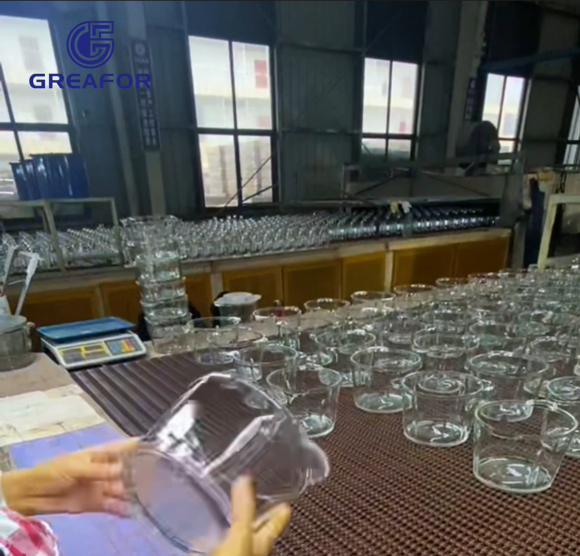
6. Use the Sample to Test the Complete Assembly
A sample is the most practical way to reduce risk before committing to a bulk order.
For an existing appliance, use the sample to check the bowl against the original components—not only against a drawing.
A practical evaluation process:
-
Measure the critical dimensions. Compare bowl height, rim diameter, bottom diameter, and other agreed dimensions with the original bowl or approved drawing.
-
Check the appliance connection. Fit the bowl to the intended base and confirm that the seating, locating, and locking features align.
-
Review the blade assembly. Check the specified blade assembly and related components for correct positioning and clearance, following the appliance manufacturer’s approved assembly and testing procedures.
-
Check the lid fit. Confirm that the lid sits and engages correctly with the bowl structure.
-
Review appearance and workmanship. Inspect surface quality, visible defects, dimensional consistency, and other agreed acceptance criteria.
-
Record the approved specification. Keep the approved sample reference, drawing revision, critical dimensions, material requirements, and packaging specification on file.
These records make repeat orders easier to manage. They also give both sides a clear reference if a future requirement changes.
Visual inspection alone cannot establish that a bowl or assembled appliance is safe for use. Any functional or safety testing should follow the applicable product requirements and appropriate test procedures.
For a new OEM design, agree on the sample approval process, tooling requirements, and conditions for confirming the final production specification before moving forward.
7. How to Compare Meat Chopper Glass Bowl Suppliers
Choosing the right bowl is only part of the procurement decision. Importers also need a supplier who can support repeat orders, specification control, and clear communication during production.
When comparing suppliers, ask:
| Evaluation area | Questions to ask |
|---|---|
| Product range | Can the supplier provide different bowl capacities and structures? |
| Compatibility | Can it review original samples, drawings, and critical dimensions? |
| OEM/ODM | Can it discuss customized specifications, branding, and packaging? |
| Quality control | Are inspection procedures and acceptance criteria clearly defined? |
| Sample approval | Can buyers evaluate samples before bulk production? |
| Bulk supply | Can it confirm MOQ, lead time, and production arrangements? |
| Export packaging | Can packaging requirements be agreed for international shipping? |
| Communication | Can it maintain clear records of models and approved specifications? |
A competitive unit price matters, but it should not be the only selection criterion.
For replacement-parts distributors, inconsistent dimensions can lead to compatibility complaints and inventory complications. For appliance brands, unclear specifications can delay development and production.
A qualified supplier should help define the requirements before the order is confirmed—not simply repeat a catalog specification.
8. Preparing an OEM Meat Chopper Glass Bowl Inquiry
For a new appliance or private-label product line, start with a clear technical brief. You do not need every detail finalized, but you should identify what is confirmed and what still needs discussion.
Prepare:
-
Target bowl capacity and overall dimensions
-
Technical drawings or a physical reference sample
-
Required bottom interface and blade assembly information
-
Lid structure and any required accessories
-
Glass material and thickness requirements, where specified
-
Branding and packaging requirements
-
Estimated order quantity and target market
-
Applicable product standards or testing requirements
If you do not have a complete drawing, begin with photographs, available measurements, and the original bowl or appliance model. The supplier can then identify which details still need confirmation.
Greafor supports OEM/ODM discussions for meat chopper glass bowls, customized glass products, and related kitchen appliance components. Depending on the project, buyers can discuss product specifications, sample evaluation, packaging, and bulk production.
For a reference product, see the HJ-04 meat chopper glass bowl.
Frequently Asked Questions
How do I choose the right meat chopper glass bowl replacement?
Start with the original bowl’s capacity, overall dimensions, bottom interface, blade assembly, and lid structure. Provide a physical sample or technical drawing whenever possible, then verify compatibility before placing a bulk order.
Can I use a replacement chopper bowl with a different blade assembly?
Not necessarily. The blade assembly, shaft, seals, bowl structure, and appliance interface must be reviewed together. Confirm the dimensions and assembly requirements before using a different combination.
What information should I send to a meat chopper glass bowl supplier?
Provide the original bowl or appliance model, required capacity, critical dimensions, bottom interface details, lid requirements, estimated quantity, and destination market. Photos and drawings are helpful when a physical sample is unavailable.
Does Greafor supply OEM meat chopper glass bowls?
Yes. Greafor supports OEM/ODM discussions for meat chopper glass bowls and customized glass products. Available customization, tooling requirements, MOQ, and production schedules depend on the project.
Can I request a sample before placing a wholesale order?
Sample availability can be discussed with Greafor. Buyers should confirm the sample specification and evaluate dimensions and compatibility before approving bulk production.
What is the MOQ for meat chopper glass bowls?
MOQ depends on the model, customization requirements, packaging, and order configuration. For the HJ-04, Greafor’s published standard MOQ is 5,000 pieces per model; other models and customized projects should be confirmed separately.
Should I purchase glass bowls separately or as complete sets?
It depends on your business model. Replacement-parts distributors may need bowls only, while OEM buyers may prefer coordinated bowl, lid, and blade components. Confirm which parts are included in the quotation to avoid misunderstandings.
Request a Quote for Meat Chopper Glass Bowl Replacement or OEM Supply
Looking for a reliable meat chopper glass bowl supplier for replacement parts, wholesale orders, or a new OEM project?
Send Greafor your product model, bowl dimensions, technical drawing, photos, or physical sample details. Please also include your estimated order quantity and target market.
Our team can review your requirements and discuss:
-
Suitable bowl options and specification matching
-
Sample availability and evaluation
-
OEM/ODM requirements
-
MOQ and wholesale pricing
-
Packaging and estimated production lead time
Contact Greafor to discuss your meat chopper glass bowl replacement or OEM project.