

What MOQ Should You Expect from a Blender Jar Factory?
When sourcing blender glass jars from China for wholesale distribution, replacement-parts programs, private-label sales, or OEM development, one of the first questions buyers ask is:
“What is your MOQ?”
For many importers, a quotation for several thousand jars per model may seem high at first. For a customized OEM blender jar involving a new mold, dedicated specifications, or private-label packaging, the required quantity may be higher again.
So why can’t a blender glass jar factory simply produce a few hundred pieces of every model?
The answer is not simply that a factory wants wholesale buyers to place larger orders. Glass blender jars have a different production structure from many plastic accessories or small appliance components. Glass melting, mold preparation, production scheduling, forming, annealing, inspection, protective packaging, and export logistics all create costs that are difficult to spread across a very small production run.
For importers, distributors, wholesalers, and procurement teams, the most useful question is not only:
“What is the lowest MOQ available?”
It is:
“What order quantity gives us the best balance between unit cost, inventory turnover, packaging efficiency, compatibility requirements, and landed cost?”
This guide explains how blender jar MOQ is determined and how B2B buyers can evaluate MOQ more effectively before starting wholesale or OEM production.
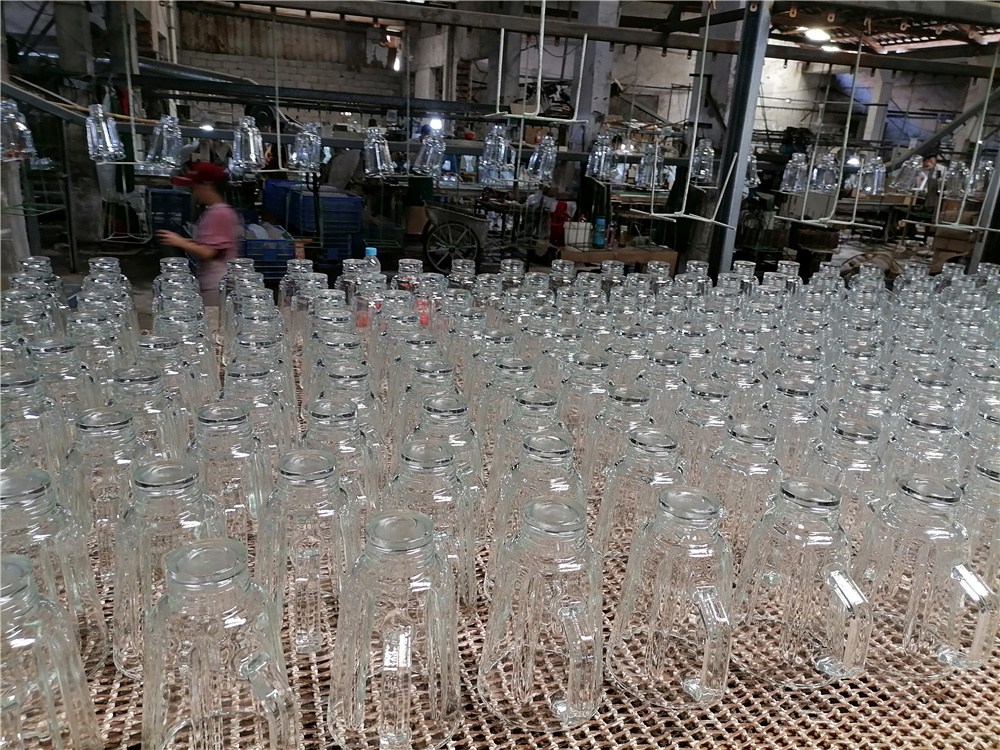
Quick Answer: What Is the Typical MOQ for Blender Glass Jars?
There is no universal MOQ that applies to every blender glass jar factory or every product model. The practical MOQ depends on the jar design, mold availability, glass specification, production process, packaging, customization requirements, order structure, and expected demand.
For many regular wholesale blender jar projects, several thousand pieces per model may be a practical reference point. For OEM projects involving new molds, customized dimensions, unique bottom structures, dedicated blade compatibility, custom logos, or printed retail packaging, the required quantity may be higher.
At Greafor, 5,000 pcs per model can be a practical MOQ reference for many standard blender glass jar projects. For some customized OEM projects, 8,000–10,000 pcs or more may be more suitable depending on the product, tooling, packaging, and production plan.
These figures are not universal industry standards. The final MOQ should always be evaluated according to the specific jar model, technical requirements, mold status, packaging solution, and purchasing plan.
Why Blender Glass Jar MOQ Is Different from Plastic Accessories
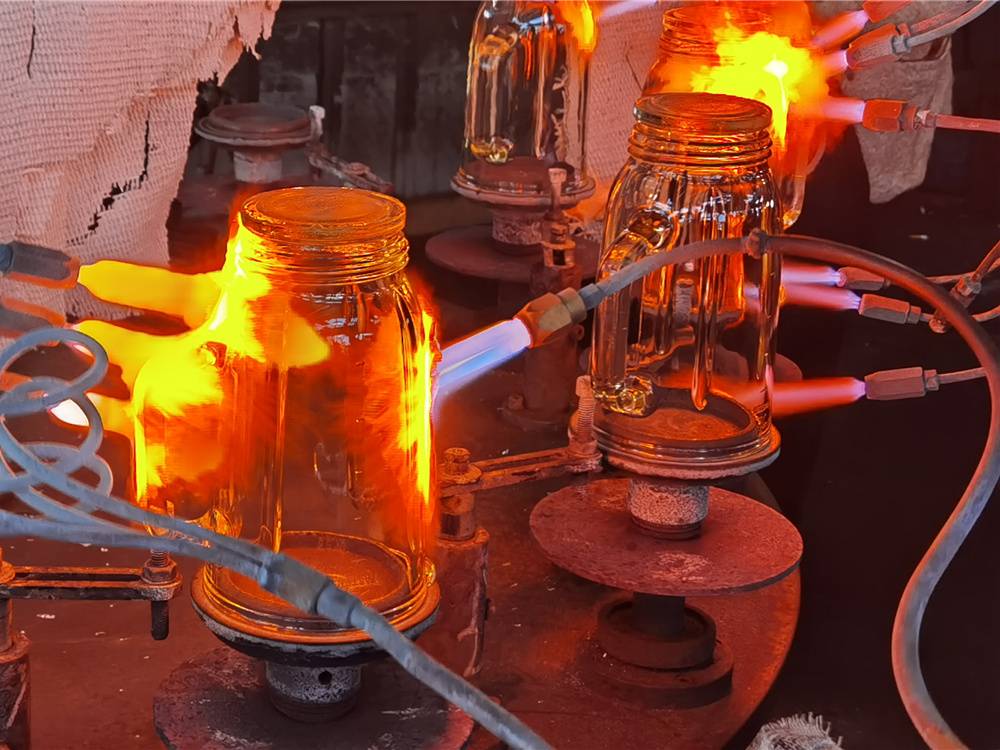
A glass blender jar is not simply cut from a sheet of glass and assembled. Industrial glass production involves several coordinated manufacturing stages, including raw-material preparation, high-temperature melting, forming through molds, annealing, inspection, and protective packaging.
These stages require production planning, equipment capacity, molds, operators, quality-control resources, packaging materials, and warehouse coordination. Some of these costs remain relatively similar whether a production run produces 1,000 pieces or several thousand pieces.
When the order quantity is very small, those setup and production-related costs are divided across fewer jars. This increases the average cost per piece. When a production run reaches a more efficient volume, the same planning and production resources can be allocated more effectively.
This is the commercial logic behind MOQ in glass blender jar manufacturing. MOQ is not only a sales condition. It is also connected to how efficiently a factory can produce, inspect, pack, and ship a specific jar model.
1. Glass Melting and Production Capacity
Glass manufacturing requires high-temperature melting before the material can be formed into jars. Unlike simple accessories that may be produced in short and highly flexible runs, glass production depends on coordinated use of furnace capacity, forming equipment, molds, labor, inspection, and production scheduling.
This does not mean a factory needs one fixed quantity simply to keep a furnace operating. The more accurate explanation is that each jar model requires planned use of production resources. If a special blender jar is scheduled for only a few hundred pieces, the preparation and operating cost must be recovered through a relatively small number of finished products.
When several thousand pieces are produced in one run, the same production planning can be used more efficiently. This may create a more reasonable cost structure for both the manufacturer and the buyer.
For procurement teams, this is why glass blender jar MOQ can be higher than MOQ requirements for simpler plastic lids, seals, or small accessory parts.
2. Mold Availability Has a Direct Effect on MOQ
Every blender glass jar requires a specific mold configuration to achieve its required dimensions and shape. The mold influences jar height, diameter, wall profile, bottom structure, opening size, thread or connection area, and overall product appearance.
If the buyer selects an existing compatible blender glass jar model, the factory may already have the appropriate mold, production experience, technical specification, and packaging method. This can make the project easier to organize and may support a more practical MOQ.
A new OEM blender jar project is different. If a buyer requires a completely new jar design, the production process may include:
- Review of the buyer’s sample, drawing, or product specification
- Tooling and mold development
- Initial mold trials and sample production
- Dimensional review and compatibility confirmation
- Possible mold adjustment before final approval
- Pre-production sample confirmation
- Mass-production planning and packaging preparation
Tooling is therefore more than a one-time development charge. It also influences the quantity required to make the full OEM project commercially practical.
Buyers should not expect identical MOQ logic for an existing replacement glass jar model and a new OEM blender jar design.
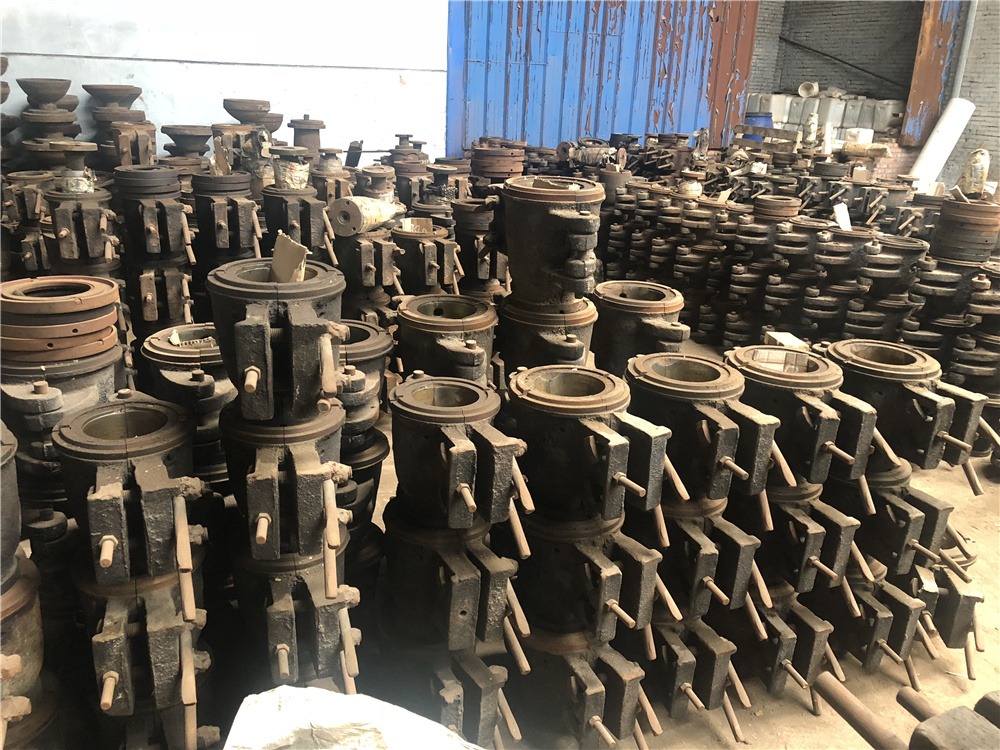
3. Production Setup Must Be Spread Across the Order
Every production run requires preparation. The factory needs to allocate molds, production time, operators, quality-control personnel, packaging materials, warehouse space, and inspection resources for the relevant jar model.
If a factory prepares for a particular SKU but produces only a small number of jars, the fixed production-related cost per piece can be relatively high. Producing a larger quantity does not necessarily multiply every setup cost at the same rate.
This is why unit pricing often improves when buyers move from a low trial quantity to a more efficient production quantity. The purpose is not simply to encourage a larger purchase. The purpose is to reach a volume where production resources, inspection work, and packaging materials can be used more effectively.
Instead of asking for only one MOQ quotation, buyers should request price tiers for several quantities.
For example:
- 5,000 pcs per model
- 8,000 pcs per model
- 10,000 pcs per model
- 20,000 pcs per model
Comparing these tiers helps procurement teams understand where production efficiency and unit-cost advantages begin for a specific model.
4. Why OEM Blender Jar Projects Often Require Higher Quantities
OEM projects typically involve more than adding a logo to an existing glass jar. A customized blender jar may require a new mold, modified dimensions, different glass weight, a special bottom structure, specific blade assembly compatibility, a custom lid, a dedicated seal, branded retail packaging, or carton printing.
Each added customization can increase development work, setup complexity, inspection requirements, packaging preparation, and production planning. This is why a customized OEM project may require a higher MOQ than a standard compatible replacement jar.
However, a higher MOQ does not automatically mean a poor purchasing decision. If the customized jar becomes a core SKU for a distributor, private-label brand, or appliance program, the larger production quantity may offer better unit economics and more stable long-term supply.
For OEM buyers, the better question is:
“Which quantity gives us the best balance between tooling investment, unit price, inventory turnover, packaging, and landed cost?”
5. Packaging Requirements Influence the Practical MOQ
Glass blender jars require more protective packaging than many plastic accessories. The packaging is not only a presentation issue. It is part of the product-protection and logistics plan.
Depending on the jar model and buyer requirements, export packaging may include:
- Individual protection materials
- Foam, pulp, or protective inserts
- Inner cartons and export cartons
- Carton dividers
- Pallet packing
- Customized retail boxes
- Private-label labels, barcodes, and printed cartons
For a small order, customized packaging can become relatively expensive because printing, inserts, cartons, and other packing materials may need to be purchased in limited quantities. When thousands of identical jars are packed together, packaging can usually be planned more efficiently.
This is why buyers should discuss packaging together with MOQ, especially for OEM, retail-ready, and private-label blender jar projects.
6. MOQ Should Be Evaluated Together with Landed Cost
A low MOQ may reduce initial inventory investment, but it does not always result in the lowest landed cost per jar.
International purchasing involves more than factory price. Buyers may also need to consider export packaging, inland transport, export documentation, origin handling, freight, destination port costs, customs clearance, duties, local delivery, and warehouse handling.
A practical purchasing formula is:
Landed Cost = Product Cost + Packaging + Freight + Import and Handling Costs
Many logistics costs are not directly proportional to the number of jars. Therefore, dividing the total logistics cost across a small shipment may result in a higher freight cost per piece than dividing the same type of costs across a larger bulk order.
For example, an order of 1,000 jars may require less inventory investment, but it may have a higher product cost and higher logistics cost per unit. A larger order may require more working capital and warehouse capacity, but it can sometimes provide more efficient production and shipping economics.
The correct choice depends on the buyer’s sales forecast, inventory capacity, purchasing budget, and target market demand.
7. Higher MOQ Is Not Always Better: Consider Inventory Turnover
A larger order is not automatically the best option. If a distributor orders a high quantity of a blender jar model but local sales are slow, the lower unit price may not compensate for the inventory cost, storage requirements, and delayed cash flow.
MOQ should be reviewed together with:
MOQ + Unit Price + Sales Forecast + Inventory Turnover + Landed Cost
A distributor with established demand and regular repeat orders may prefer a larger production run to improve unit economics. A new importer testing a market may prefer an existing compatible model with a more manageable initial quantity, even if the unit price is slightly higher.
The best MOQ is not necessarily the lowest or highest number. It is the quantity that fits your expected sales rate, warehouse capacity, financing plan, and replacement-parts strategy.
8. Existing Replacement Models and New OEM Models Need Different Planning
Wholesale blender jar projects generally fall into two categories:
Existing Compatible Blender Glass Jar Models
These projects use an existing jar design or verified compatible model. The factory may already have the mold, specifications, production experience, quality-control process, and standard export packaging.
This can make the project faster to start and may support a more practical MOQ for buyers entering a replacement-parts market.
New OEM Blender Glass Jar Models
These projects require development work. Buyers may need to provide a reference sample, drawing, required capacity, dimensions, blade assembly information, coupling details, lid requirements, packaging expectations, and target order quantity.
The project may involve tooling, sample approval, compatibility review, product testing, packaging development, and mass-production planning. Therefore, MOQ, lead time, and cost structure may differ from an existing standard model.
Understanding this difference allows procurement teams to compare quotations more accurately and choose the right supply route for their business.
9. Can Multiple Blender Jar SKUs Be Combined?
Buyers often ask whether a total MOQ can be divided across several blender jar models. This is a valid question, but the answer depends on the specific production requirements.
Whether several SKUs can be planned together may depend on:
- Availability of molds for each jar model
- Glass specifications and production process requirements
- Jar size, weight, and forming structure
- Production schedule and machine availability
- Blade, lid, base, and accessory requirements
- Packaging format and carton quantities
- Factory production policy and shipment plan
Two products may both be glass blender jars but still require separate molds, production arrangements, inspection procedures, and packaging materials.
Instead of asking:
“Can we split 5,000 pieces across ten different models?”
Ask:
“Can you review our target models and recommend the most efficient quantity and production plan for each SKU?”
This gives the factory enough information to propose a more realistic wholesale sourcing solution.
10. What Should Procurement Teams Ask Before Confirming MOQ?
Before choosing a blender glass jar supplier, buyers should compare more than the headline MOQ. The following questions can help evaluate the full sourcing proposal.
MOQ and Product Planning
- What is the MOQ per blender glass jar model?
- Is the MOQ different for standard models and OEM projects?
- Can selected models be included in a mixed-SKU production plan?
- Which products are suitable for trial orders and which require larger production volumes?
Molds and Tooling
- Is the required glass jar mold already available?
- Is new tooling required for the project?
- What is the estimated tooling cost and development process?
- Who owns the mold after the OEM project is completed?
- Can the supplier provide a pre-production sample for approval?
Pricing and Landed Cost
- What is the unit price at different quantity levels?
- How does the price change with packaging requirements?
- What carton quantity and packing method are recommended?
- What shipment volume can be planned for LCL, pallet, or container orders?
- Which order quantity offers the best balance between unit price and freight efficiency?
Compatibility and Components
- Can the jar match the required blade assembly?
- Can compatible couplings, lids, seals, and jar bases be supplied together?
- Can the supplier review photos, dimensions, drawings, or original samples?
- Can the factory provide compatibility references for the target model group?
11. How to Choose the Right Blender Jar Factory for an OEM Project
For OEM and wholesale projects, the lowest MOQ should not be the only factor used to choose a supplier. A suitable blender jar manufacturer should be able to understand the complete product configuration and support buyers before, during, and after production.
A replacement blender jar may need to work with:
- The glass jar itself
- The blade assembly
- The coupling
- The lid
- The sealing ring
- The jar base or bottom ring
- The target blender motor base
A supplier that can review these components together can make sourcing more efficient for importers, distributors, and brand owners.
For a long-term blender replacement-parts program, look for a supplier that can discuss:
- Existing compatible glass jar models
- New mold and OEM development options
- Sample evaluation and compatibility review
- Production quantity and price tiers
- Quality inspection and packing requirements
- Bulk shipment and export coordination
- Future repeat orders and SKU expansion plans
Final Takeaway: The Right MOQ Is About Total Cost, Not Quantity Alone
When an blender jar importer receives a quote with a 5,000-piece MOQ for blender glass jars, it may be tempting to assume that the supplier simply wants a larger order. In reality, glass manufacturing involves production planning, molds, high-temperature forming, annealing, inspection, packaging, and logistics.
These factors create a cost structure that is different from many smaller plastic accessories or low-complexity components.
The most useful purchasing question is not:
“How can we get the lowest MOQ?”
It is:
“What quantity gives us the best combination of unit price, production efficiency, inventory turnover, packaging protection, compatibility, and landed cost?”
For importers, wholesalers, distributors, and OEM procurement teams, this is the more practical way to evaluate a blender jar factory and build a stable long-term supply program.
Request MOQ and Price Tier Details for Your Blender Jar Project
Planning a wholesale blender glass jar order, a compatible replacement-parts program, or a new OEM blender jar project? Send Greafor your target model, required capacity, estimated quantity, product photos, sample information, packaging requirements, and destination market.
Our team can help review the suitable jar configuration, mold status, MOQ, price tiers, matching blade and coupling requirements, protective packaging, and practical bulk-order options before sample development and mass production.