

Chile Customer Visits Greafor Factory to Explore Blender Parts and OEM Solutions
For importers, distributors, appliance brands, and aftermarket parts wholesalers, choosing a blender parts supplier is not only about comparing product prices. Before developing a sourcing program, buyers also need to understand a supplier’s product range, manufacturing capabilities, quality control approach, compatibility knowledge, and ability to support future requirements.
Recently, a customer from Chile visited Greafor in Foshan, China to review blender glass jars, blender spare parts, meat chopper glass bowls, and potential OEM/ODM sourcing options. The visit gave both teams an opportunity to inspect product samples, discuss technical requirements, and explore possible product solutions for the Chilean and wider Latin American market.
For B2B buyers, a factory visit is more than a showroom tour. It provides a practical opportunity to compare physical products, communicate directly with the supplier, and evaluate whether the supplier understands the customer’s product, market, and compatibility requirements.
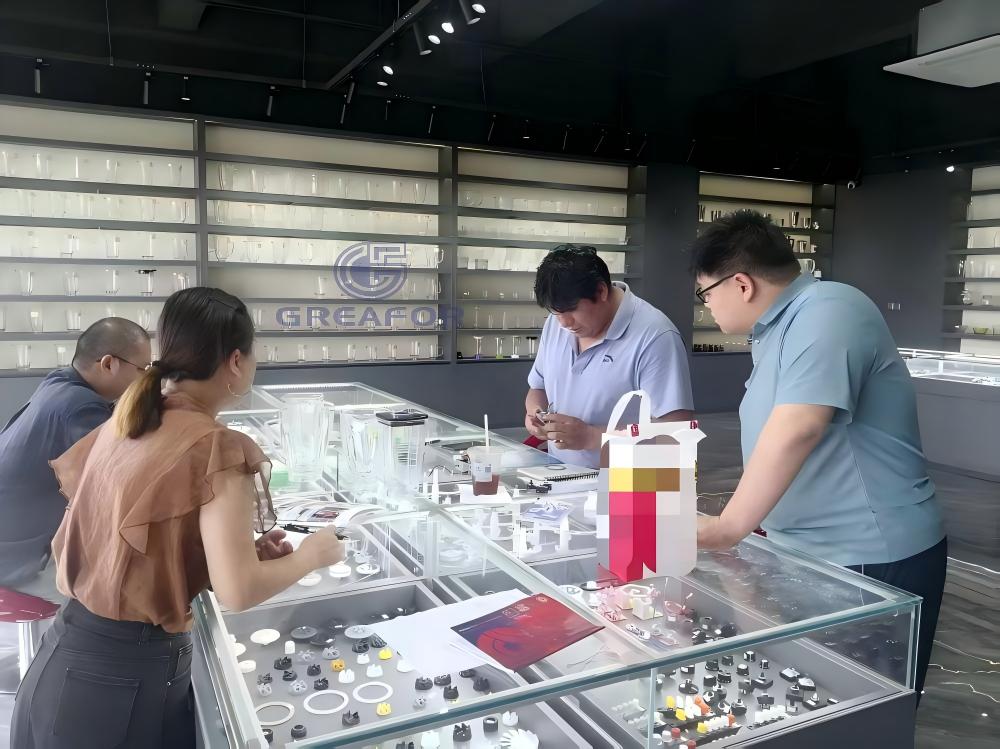
Reviewing Blender Glass Jars and Spare Parts in Person
During the visit, the Chilean customer reviewed a range of blender-related products in Greafor’s showroom. The discussion included blender glass jars, small glass grinding jars, blade-related components, couplings, lids, sealing parts, jar bases, and selected meat chopper glass bowls.
For businesses sourcing replacement parts, reviewing physical samples can be valuable because compatibility is not always clear from catalog images or product capacity descriptions. Two glass jars may look similar but use different threads, bottom structures, blade connections, couplings, lids, seals, or locking positions.
During an on-site product review, buyers can compare:
- Glass jar capacity, height, diameter, and overall shape
- Jar bottom structure and blade assembly connection
- Thread design, lid opening, and sealing arrangement
- Blade assembly, coupling, jar base, and related components
- Glass material, finish, and product appearance requirements
- Individual packing, export cartons, and retail packaging options
- Potential compatibility with target blender models
This type of direct review helps buyers evaluate products based on actual structures and dimensions rather than relying only on general product photos or similar-looking reference models.
Compatibility Discussion for Blender Replacement Parts
Compatibility was an important topic during the discussion. For blender aftermarket distributors, a replacement glass jar or component must match the intended blender model and its mechanical connection system.
A replacement part may have the correct capacity and appearance but still be unsuitable if the thread, bottom diameter, blade assembly, coupling, lid, or sealing structure is different from the original configuration.
Buyers evaluating blender replacement parts can prepare information such as:
- Target blender brand reference and model number
- Photos of the original glass jar and blender base
- Jar bottom, thread, blade assembly, and coupling photos
- Overall height, bottom diameter, and capacity measurements
- Original samples or technical drawings, when available
- Required lids, seals, bases, blades, or accessory combinations
- Target market, packaging requirements, and intended sales channel
With this information, a supplier can evaluate whether an existing compatible model may be suitable or whether a customized product-development approach should be considered.
Buyers who need a detailed technical reference can review Greafor’s Blender Glass Jar Compatibility Guide for Wholesale Buyers .
Why Factory Visits Matter for Importers and Distributors
For a consumer, purchasing a blender accessory may be a simple transaction. For an importer or distributor, product selection affects a wider supply chain that may include warehouse planning, sales channels, repair networks, packaging, future replenishment, and customer service.
A factory visit can help B2B buyers evaluate several areas before moving forward with product development or sourcing discussions.
Product Range
Buyers can inspect actual blender glass jars, grinding jars, blades, couplings, lids, seals, and other spare parts instead of relying entirely on online photos. This can make it easier to identify product structures that may fit the buyer’s target market and model requirements.
Technical Communication
Direct discussion gives buyers an opportunity to explain product issues, target models, customer requests, compatibility concerns, and packaging expectations. It also gives the supplier a clearer understanding of the buyer’s sourcing goals.
OEM and Customization Options
For buyers requiring a dedicated product range, a face-to-face meeting can help clarify glass jar dimensions, blade assembly requirements, lid structures, packaging, logos, labels, and other private-label details.
Quality and Packaging Review
Buyers can also discuss product inspection, sample confirmation, protective packaging, carton requirements, and export preparation. These details are particularly important for glass products that require suitable protection during storage, handling, and international transportation.
Exploring Blender Parts and OEM Solutions for Chile
Chile is part of Greafor’s wider Latin American market focus. Importers, distributors, wholesalers, appliance brands, and aftermarket suppliers in Chile may require different product combinations depending on the blender models already used in their market.
A potential sourcing program may involve more than one product category:
Blender Glass Jars → Blade Assemblies → Couplings → Lids → Sealing Parts → Jar Bases → Other Compatible Replacement Components
Selecting parts as compatible product groups can help distributors build a more practical catalog, simplify customer communication, and reduce the risk of stocking unrelated components that cannot be sold together.
For buyers exploring OEM or private-label opportunities, the discussion may also include customized glass jar capacity, jar shape, bottom structure, blade compatibility, lids, seals, logos, labels, and packaging.
Any product-development project should be evaluated according to the actual model requirements, technical drawings, samples, market positioning, and intended purchasing plan.
From Product Review to Better Sourcing Decisions
A customer visit does not need to begin with a finalized purchase order to be valuable. For many B2B buyers, the purpose of visiting a factory is to collect better information before making a sourcing decision.
By reviewing physical samples, discussing compatibility requirements, and examining possible OEM solutions, buyers can gain a clearer understanding of the supplier’s products and capabilities.
The visit from the Chilean customer reflects this type of B2B evaluation process: reviewing blender products directly, discussing target market needs, and exploring practical sourcing options for future consideration.
Buyers can also explore Greafor’s existing international blender glass jar and replacement-parts project cases through the Greafor Projects Page .
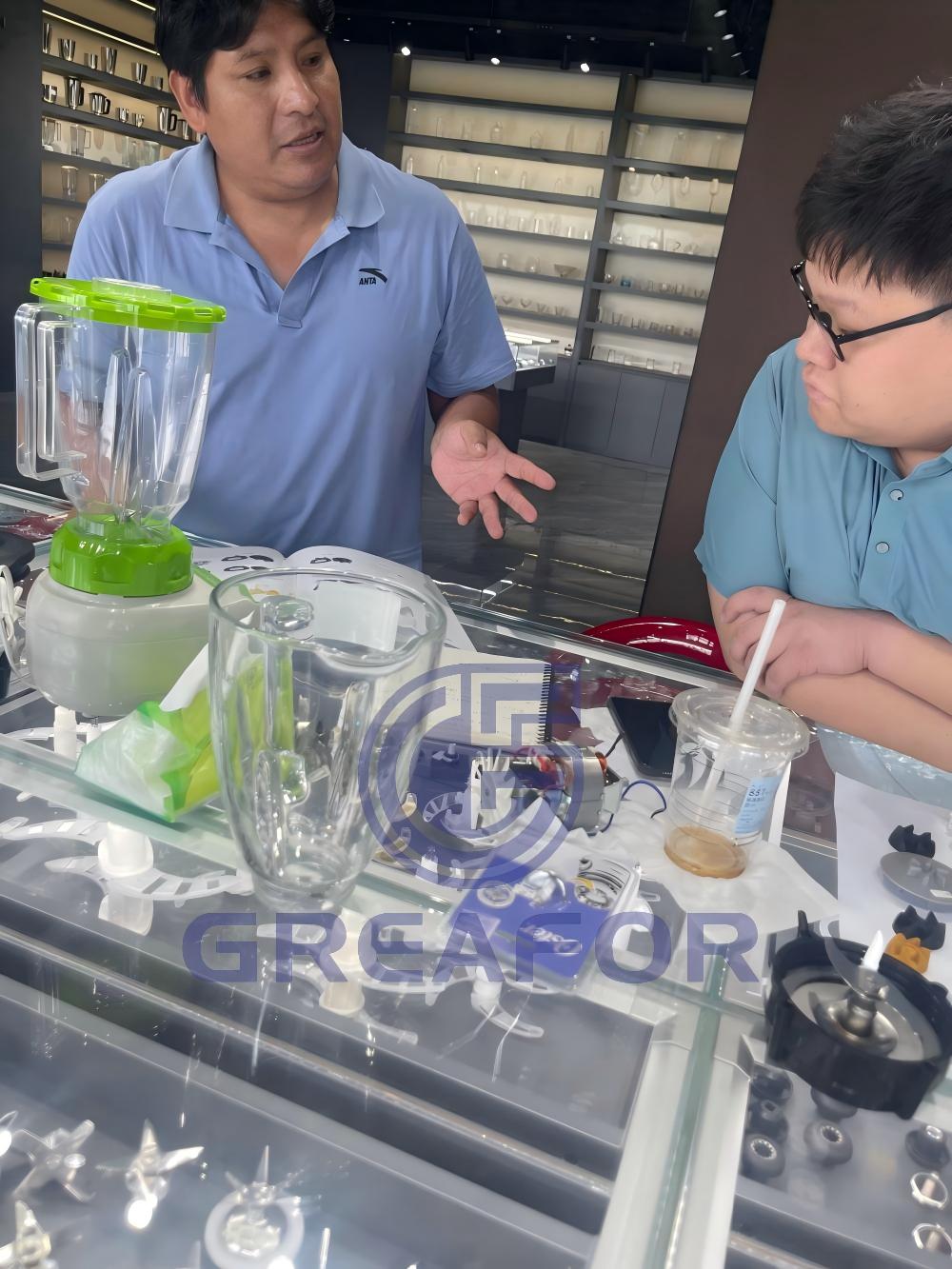
Planning a Blender Parts or OEM Sourcing Project?
If you are an importer, distributor, wholesaler, appliance brand, or aftermarket parts supplier looking for blender glass jars, compatible replacement components, blade assemblies, couplings, lids, seals, or meat chopper glass bowls, send Greafor your product requirements.
To support a more accurate review, please include your target blender model numbers, product photos, key dimensions, original samples if available, packaging requirements, estimated quantity, target market, and OEM or private-label needs.
Our team can help evaluate suitable product configurations, compatibility requirements, sample options, packaging solutions, and potential sourcing approaches for your market.